Stray dog
Canis lupus familiaris
wildlifeHow to Identify
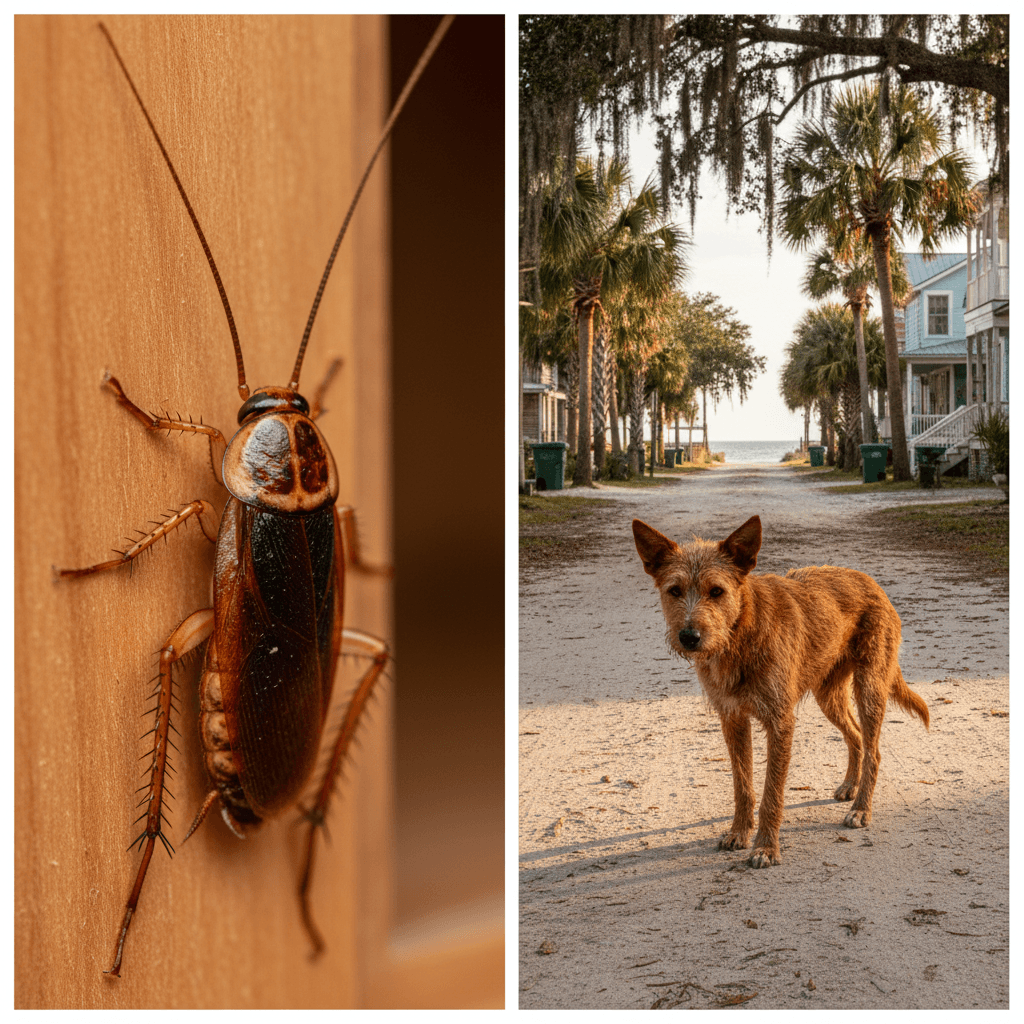
Stray dogs are typically medium to large in size and can be any breed or mix. They often appear unkempt, may be underweight, and exhibit signs of neglect or injury. Their behavior can range from fearful and skittish to aggressive and territorial depending on their past experiences.
Signs of Infestation
Signs of stray dogs around a property include digging in gardens or trash cans, leaving droppings, and repeated barking or howling. You may also notice damaged landscaping or evidence of them trying to enter structures for shelter, especially during storms common in Myrtle Beach.
Health Risks
Stray dogs can pose health risks to residents of Myrtle Beach by carrying diseases such as rabies, parasites like fleas and ticks, and bacterial infections. They can also be aggressive, especially when protecting territory or food, leading to potential bite injuries. Contact with pet waste can transmit diseases to humans and other animals.
Our Treatment Method
MBPC does not handle stray dog removal directly. For stray dog concerns on the Grand Strand, contact Horry County Animal Care or the City of Myrtle Beach Animal Control. They are equipped to safely capture and handle stray animals, ensuring adherence to SC Department of Pesticide Regulation guidelines concerning wildlife interactions.
Prevention Tips
Secure garbage cans and compost piles to prevent attracting stray dogs to your Myrtle Beach property. Avoid feeding them, as this encourages them to stay in the area. Report any sightings of stray or aggressive dogs to Horry County Animal Care to help control the population.
Habitat
Stray dogs adapt to various environments in coastal South Carolina, often found near residential areas, parks, and beaches where food and shelter are more accessible. They frequently seek refuge under porches, in sheds, or near dumpsters. The mild winters and warm summers of Myrtle Beach allow them to survive year-round.
Peak activity: Year-Round
Identification Photos
Frequently Asked Questions About Stray dog
Maintain a safe distance and avoid direct eye contact. Do not approach the dog, especially if it appears aggressive or injured. Contact Horry County Animal Care or the City of Myrtle Beach Animal Control immediately to report the sighting.
While it may seem compassionate, feeding stray dogs encourages them to stay in the area and can lead to population growth. It also disrupts their natural foraging behaviors. It's best to contact animal control, who can assess the dog's needs and provide appropriate care.
Stray dogs can carry diseases such as rabies, parvovirus, distemper, and parasites like fleas, ticks, and worms. These diseases can be transmitted to humans and other animals through bites, scratches, or contact with contaminated waste in your Myrtle Beach yard.
Horry County Animal Care and the City of Myrtle Beach Animal Control are responsible for handling stray dog issues. They can capture, vaccinate, and provide shelter for stray animals. They also investigate reports of aggressive dogs and enforce local animal control ordinances.
Don't Let Pests Win.
Take Back Your Home Today.
Every day you wait gives pests more time to multiply and cause damage. Our licensed technicians are ready to help — often the same day you call.
Free Inspection
No cost, no obligation
Same-Day Service
Fast response guaranteed
Eco-Friendly
Safe for family & pets
100% Guarantee
Pests return, so do we
Ready to get started?
Choose how you'd like to connect with us.
Available Mon-Fri 8am-6pm, Sat 9am-2pm