Turkey Vulture
Cathartes aura
birdsHow to Identify
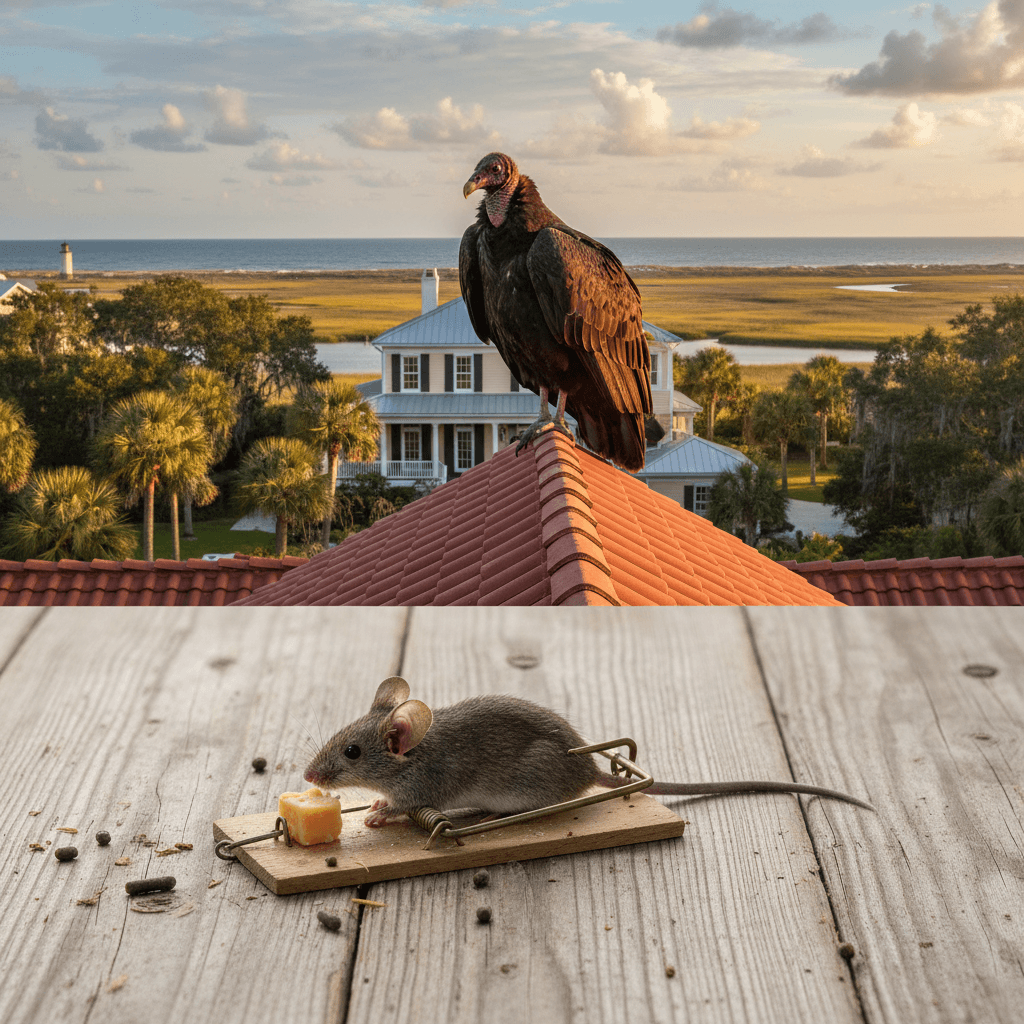
Turkey vultures are large birds with dark brown to black plumage and a featherless red head. They have a wingspan of about 6 feet and a distinctive, wobbly flight pattern, often soaring in circles.
Signs of Infestation
While not an infestation in the traditional sense, homeowners may notice an increased presence of turkey vultures if there are deceased animals on their property or in nearby areas. Large groups of vultures roosting on roofs or in trees can also be a nuisance.
Health Risks
Turkey vultures are scavengers and can carry bacteria and pathogens. While direct contact is unlikely, their presence near homes in Myrtle Beach may pose a minor health risk, especially if they are attracted to garbage or deceased animals. It's important to maintain a clean property to discourage their presence.
Our Treatment Method
MBPC does not directly control turkey vultures. However, we can advise on removing attractants like carcasses from your Grand Strand property. For persistent issues or large roosting congregations, contact the SC Department of Natural Resources or a wildlife removal specialist. Remember that vultures are protected by federal law.
Prevention Tips
Keep your property clean and remove any potential food sources, such as deceased animals or uncovered garbage. Ensure garbage bins are securely closed to prevent attracting scavengers. Trim trees to discourage roosting, and consider using visual deterrents if vultures become a persistent nuisance in your Myrtle Beach yard.
Habitat
Turkey vultures are common throughout South Carolina, including the coastal areas of Myrtle Beach. They prefer open areas for soaring but roost in wooded areas, often near roads and residential areas. They are attracted to areas where food sources like carrion are readily available in our humid subtropical climate.
Peak activity: Year-Round
Identification Photos
Frequently Asked Questions About Turkey Vulture
Turkey vultures are generally not dangerous to people or pets. They are scavengers that primarily feed on carrion. While they may be unsightly, they pose little direct threat to humans or animals in the Myrtle Beach area.
Turkey vultures circle to locate food using their keen sense of smell. They may be detecting the scent of a deceased animal nearby. This behavior is common and usually doesn't indicate a serious problem, but it's a good idea to check for potential sources of carrion on your property.
To discourage roosting, try using visual deterrents such as reflective tape or scarecrows. Regularly cleaning your roof and removing any potential food sources can also help. If the problem persists, consult with a wildlife removal specialist in the Grand Strand area for humane solutions.
Yes, turkey vultures are protected under the Migratory Bird Treaty Act. It is illegal to harm, kill, or possess them without a permit. If you have concerns about vultures on your property in Myrtle Beach, contact the SC Department of Natural Resources for guidance.
Don't Let Pests Win.
Take Back Your Home Today.
Every day you wait gives pests more time to multiply and cause damage. Our licensed technicians are ready to help — often the same day you call.
Free Inspection
No cost, no obligation
Same-Day Service
Fast response guaranteed
Eco-Friendly
Safe for family & pets
100% Guarantee
Pests return, so do we
Ready to get started?
Choose how you'd like to connect with us.
Available Mon-Fri 8am-6pm, Sat 9am-2pm