White-tailed Deer
Odocoileus virginianus
wildlifeHow to Identify
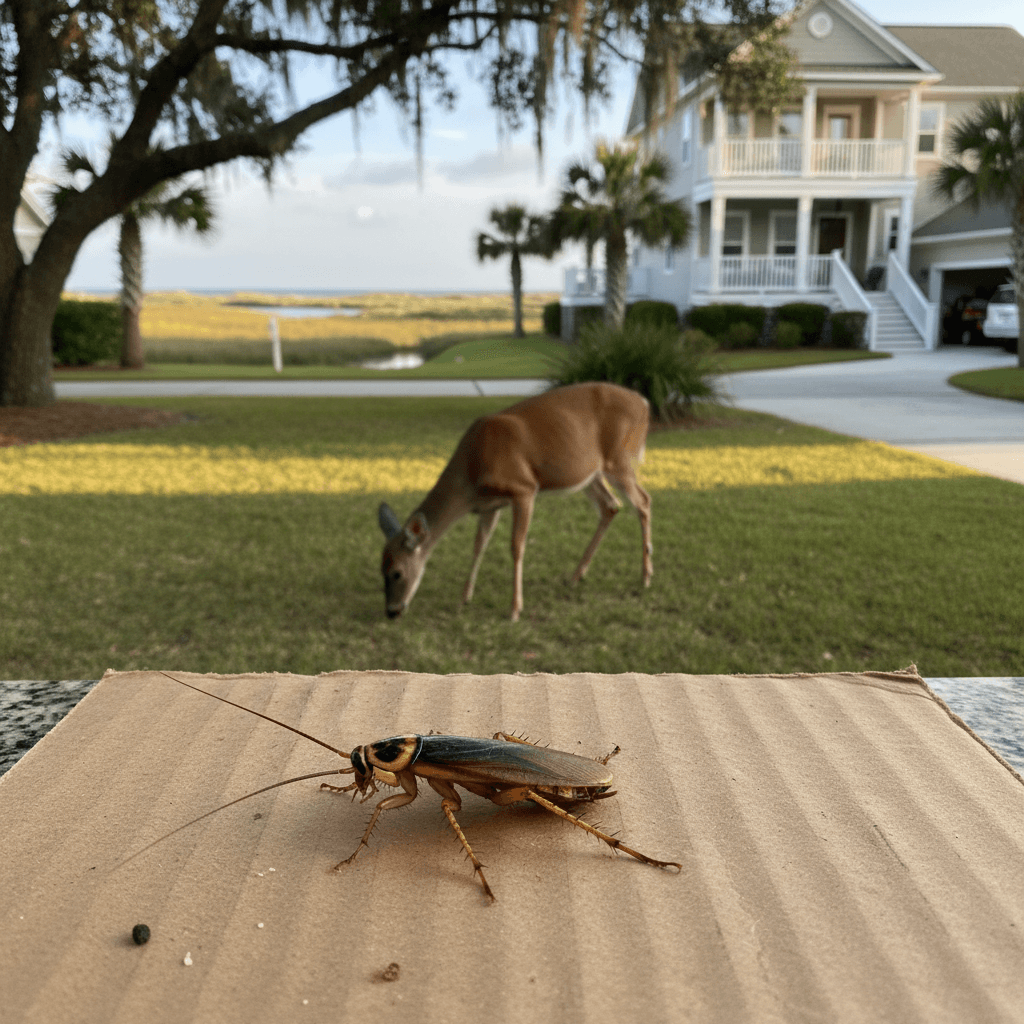
White-tailed deer are easily identified by their reddish-brown coat in the summer and grayish-brown coat in the winter. They have a distinctive white patch under their tail, which they raise as a warning signal. Adult males (bucks) grow antlers annually, which are covered in velvet during growth.
Signs of Infestation
Signs of deer activity include tracks in gardens or yards, especially after rain. You may also notice browsing damage on ornamental plants, shrubs, and trees, with cleanly clipped or torn leaves and stems. Deer droppings, which are small, dark pellets, may also be visible.
Health Risks
While not directly harmful to humans, deer can carry ticks that transmit Lyme disease and other illnesses, a concern in Myrtle Beach. They can also cause vehicle collisions, posing a safety risk on roadways. Deer can also indirectly affect human health by damaging gardens and crops used for food.
Our Treatment Method
MBPC does not directly handle deer removal, as they are a protected species managed by the SC Department of Natural Resources. However, we can advise on deterrent strategies and recommend licensed wildlife removal services if necessary. Our services focus on preventing deer from causing damage to your Grand Strand property.
Prevention Tips
Install fencing around gardens and vulnerable plants to deter deer. Use deer-repellent sprays or devices, rotating them regularly to prevent habituation. Remove food sources such as fallen fruit or spilled birdseed from your yard in Myrtle Beach to discourage deer from visiting your property.
Habitat
White-tailed deer are common throughout South Carolina, including the coastal areas around Myrtle Beach. They thrive in a variety of habitats, including forests, fields, and suburban areas. The humid subtropical climate and abundant vegetation provide ample food and shelter.
Peak activity: Year-Round
Identification Photos
Frequently Asked Questions About White-tailed Deer
While generally not aggressive, deer can become unpredictable, especially during mating season (rut) or when protecting their young. They also pose a traffic hazard and can carry ticks that transmit disease. Keep a safe distance and avoid approaching them.
Deer are attracted to a variety of ornamental plants, including hostas, impatiens, and daylilies. They also browse on young trees and shrubs. Consider planting deer-resistant species such as lavender, rosemary, or ornamental grasses in your Myrtle Beach garden.
Feeding deer is discouraged in Myrtle Beach as it can lead to overpopulation, dependence on humans, and increased risk of disease transmission. It can also attract deer to roadways, increasing the risk of accidents. Instead, focus on habitat modification to deter deer.
While MBPC doesn't handle deer removal, we can assess your property and provide advice on deterrent strategies, such as fencing and repellents. We can also connect you with licensed wildlife removal professionals if necessary to safely and humanely address deer-related issues on your Grand Strand property.
Don't Let Pests Win.
Take Back Your Home Today.
Every day you wait gives pests more time to multiply and cause damage. Our licensed technicians are ready to help — often the same day you call.
Free Inspection
No cost, no obligation
Same-Day Service
Fast response guaranteed
Eco-Friendly
Safe for family & pets
100% Guarantee
Pests return, so do we
Ready to get started?
Choose how you'd like to connect with us.
Available Mon-Fri 8am-6pm, Sat 9am-2pm