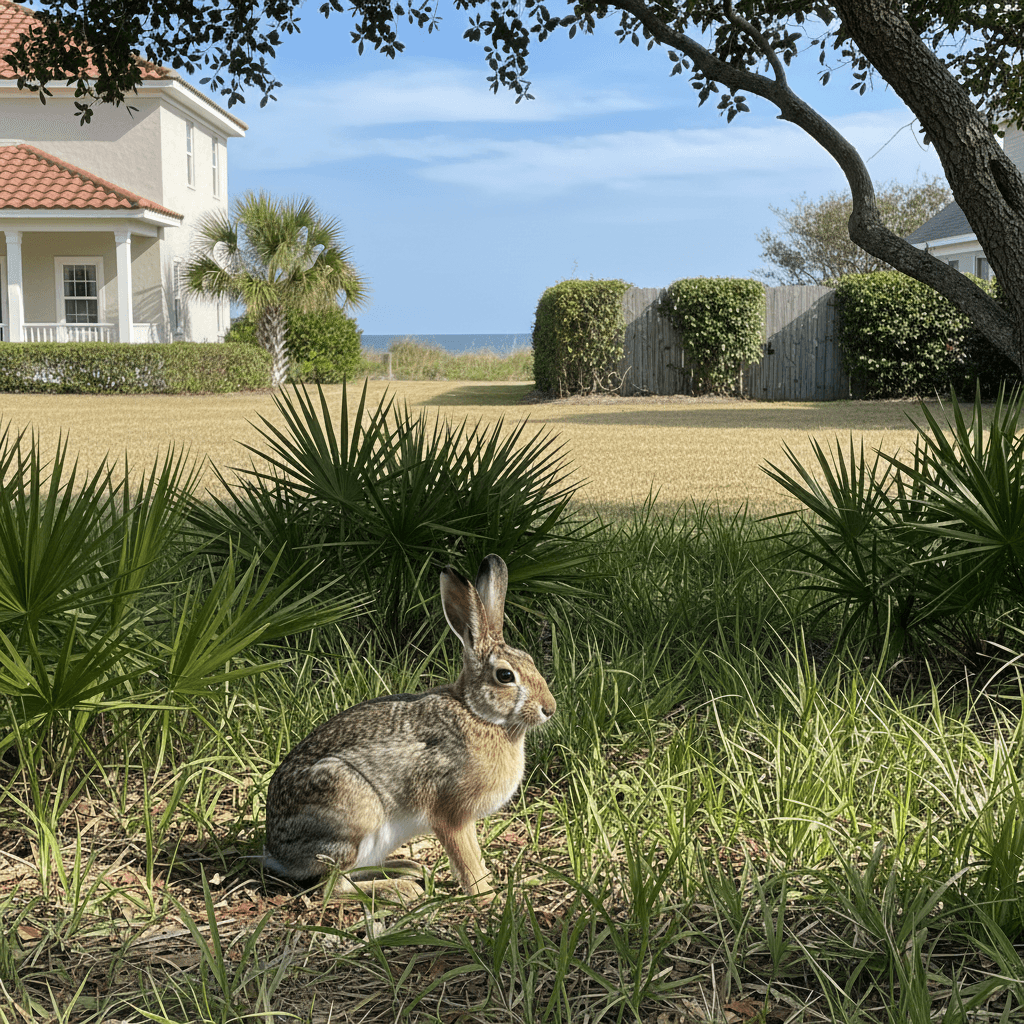
White-tailed jackrabbit
Lepus townsendii
wildlifeHow to Identify
The white-tailed jackrabbit is a large hare with very long ears and powerful hind legs. It is distinguished by its white tail and white fur that develops during the winter months. In summer, its coat is a mottled brown or gray.
Signs of Infestation
While not an infestation in the traditional sense, signs include noticeable damage to garden plants, especially vegetables and ornamental shrubs. You may also observe their characteristic pellet-shaped droppings in gardens or lawns. Look for gnawed bark on young trees and shrubs near the perimeter of your property.
Health Risks
White-tailed jackrabbits pose minimal direct health risks to humans in Myrtle Beach. However, they can carry parasites like ticks and fleas, which can transmit diseases. Their presence can also indirectly increase the risk of Lyme disease or other vector-borne illnesses if these parasites spread to pets or humans.
Our Treatment Method
MBPC does not typically handle white-tailed jackrabbit control, as they are a protected species in some areas. Exclusion methods and habitat modification are the most appropriate strategies. For guidance on humane wildlife management, contact the SC Department of Natural Resources or a licensed wildlife removal specialist.
Prevention Tips
Protect vulnerable plants with fencing or netting to prevent jackrabbits from feeding on them. Remove brush piles and other potential harborage areas from your yard. Consider planting rabbit-resistant varieties of vegetables and ornamental plants suitable for the Myrtle Beach climate.
Habitat
White-tailed jackrabbits prefer open areas, grasslands, and fields but may venture into residential areas in search of food, particularly in the Grand Strand area. They are often found near the edges of wooded areas and agricultural lands and can adapt to the coastal habitat of Myrtle Beach.
Peak activity: Year-Round
Identification Photos
Frequently Asked Questions About White-tailed jackrabbit
White-tailed jackrabbits are generally not aggressive, but they can carry ticks and fleas that could infest your pets. It's important to maintain regular flea and tick prevention for your pets in Myrtle Beach, especially if you live near open fields or wooded areas.
Fencing around your garden is the most effective way to protect your plants from jackrabbits. You can also try using repellents specifically designed for rabbits, but reapply them regularly, especially after rain. Consider planting less palatable plants around the perimeter of your garden.
Hunting regulations for jackrabbits vary by county and season in South Carolina. Always check the current regulations from the SC Department of Natural Resources before attempting to trap or remove any wildlife from your Myrtle Beach property.
While they primarily feed on vegetation above ground, jackrabbits may occasionally dig shallow holes in search of roots or bulbs. If you are experiencing extensive lawn damage, it is best to contact a local wildlife professional to determine the best course of action.
Don't Let Pests Win.
Take Back Your Home Today.
Every day you wait gives pests more time to multiply and cause damage. Our licensed technicians are ready to help — often the same day you call.
Free Inspection
No cost, no obligation
Same-Day Service
Fast response guaranteed
Eco-Friendly
Safe for family & pets
100% Guarantee
Pests return, so do we
Ready to get started?
Choose how you'd like to connect with us.
Available Mon-Fri 8am-6pm, Sat 9am-2pm