
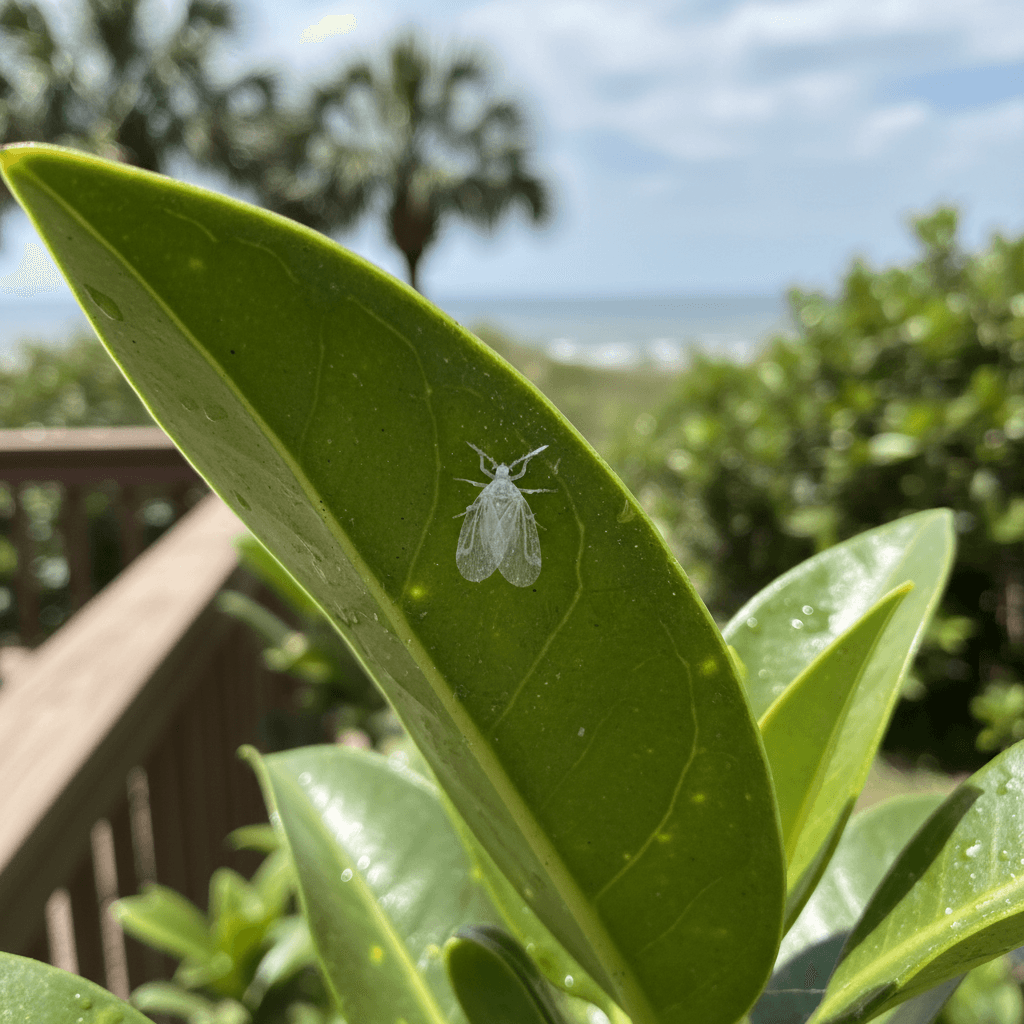
Whitefly
Trialeurodes vaporariorum
insectsHow to Identify
Whiteflies are tiny, winged insects, typically less than 1/16 inch long, with a powdery white coating on their wings and body. They resemble small moths and flutter around when disturbed. Nymphs are oval, flat, and translucent, often found on the undersides of leaves.
Signs of Infestation
Look for clusters of small, white, moth-like insects on the undersides of plant leaves. Infested plants may exhibit yellowing, stunted growth, and sticky honeydew secretions that can lead to sooty mold. Heavy infestations can cause leaf drop and reduced plant vigor in your Myrtle Beach garden.
Health Risks
Whiteflies don't directly bite or transmit diseases to humans, but their feeding activity can weaken plants and reduce yields in vegetable gardens common in the Myrtle Beach area. The honeydew they excrete can also attract ants and promote the growth of unsightly sooty mold. Allergic reactions can occur when handling infested plants.
Our Treatment Method
MBPC offers targeted treatments for whitefly infestations on your Grand Strand property. Our licensed technicians can apply insecticidal soaps, horticultural oils, or other approved insecticides to control whitefly populations while minimizing harm to beneficial insects. We follow all SC Department of Pesticide Regulation guidelines for safe and effective pest control.
Prevention Tips
Inspect plants regularly for signs of whitefly infestation, especially when bringing new plants into your Myrtle Beach garden. Use yellow sticky traps to monitor and reduce whitefly populations. Encourage natural predators like ladybugs and lacewings. Water plants properly and avoid over-fertilization, which can attract whiteflies.
Habitat
Whiteflies thrive in the warm, humid subtropical climate of Myrtle Beach, infesting a wide range of ornamental plants, vegetables, and fruit trees. They are often found in greenhouses, gardens, and landscapes throughout the coastal SC region. They prefer sheltered locations with ample foliage and protection from harsh weather.
Peak activity: Spring-Fall
Identification Photos
Frequently Asked Questions About Whitefly
Whiteflies commonly infest hibiscus, tomatoes, peppers, and poinsettias in Myrtle Beach gardens. They are also attracted to many other ornamental plants and vegetables, especially those grown in greenhouses or sheltered locations.
Yes, whiteflies can cause significant damage to vegetable gardens in Myrtle Beach by weakening plants, reducing yields, and spreading plant diseases. Heavy infestations can even kill plants if left untreated.
You can try natural methods like spraying plants with insecticidal soap or neem oil, introducing beneficial insects like ladybugs, or using yellow sticky traps to control whitefly populations in your Myrtle Beach garden. However, professional treatment may be necessary for severe infestations.
MBPC uses targeted treatments, including insecticidal soaps and horticultural oils, to control whitefly infestations on your Myrtle Beach property. We focus on safe and effective methods that minimize harm to beneficial insects and the environment.
Don't Let Pests Win.
Take Back Your Home Today.
Every day you wait gives pests more time to multiply and cause damage. Our licensed technicians are ready to help — often the same day you call.
Free Inspection
No cost, no obligation
Same-Day Service
Fast response guaranteed
Eco-Friendly
Safe for family & pets
100% Guarantee
Pests return, so do we
Ready to get started?
Choose how you'd like to connect with us.
Available Mon-Fri 8am-6pm, Sat 9am-2pm