Wild turkey
Meleagris gallopavo
birdsHow to Identify
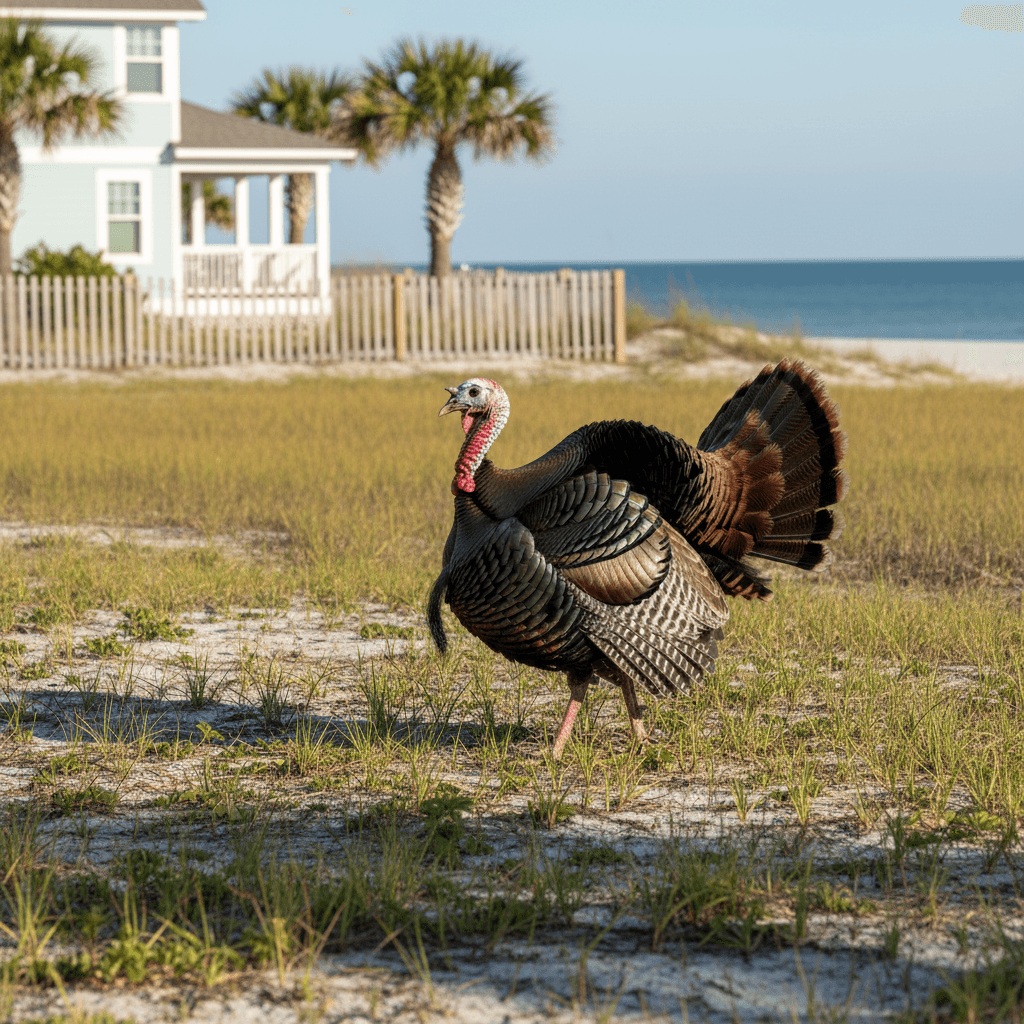
Wild turkeys are large, ground-dwelling birds with dark plumage and a bare head. Adult males (toms) have a distinctive red wattle and beard, while females (hens) are smaller and less colorful. They can weigh up to 20 pounds and have a wingspan of up to 5 feet.
Signs of Infestation
While not an infestation in the traditional sense, signs of wild turkey presence include droppings, feathers, and evidence of scratching or digging in lawns and gardens. They may also be observed roosting on roofs or in trees near homes. Increased sightings and bold behavior indicate habituation.
Health Risks
Wild turkeys are generally not a direct threat to human health in Myrtle Beach. However, they can become aggressive, especially during mating season, and may scratch or peck if they feel threatened. Their droppings can also pose a minor sanitation concern.
Our Treatment Method
MBPC does not typically handle wild turkey removal, as they are a protected species. Our licensed technicians can offer advice on deterrents and preventative measures, but relocation often requires approval from the SC Department of Natural Resources. We can assist with identifying attractants and recommend habitat modifications around your Grand Strand property.
Prevention Tips
Avoid feeding wild turkeys, as this encourages them to become habituated to humans and lose their natural fear. Secure garbage cans and compost bins to prevent them from accessing food sources. Install motion-activated sprinklers to deter them from entering your yard, especially in spring and summer.
Habitat
Wild turkeys are common in the coastal forests, fields, and suburban areas of Myrtle Beach. They thrive in the humid subtropical climate and find food and shelter in the diverse habitats of the Grand Strand, including wooded areas near residential neighborhoods and golf courses.
Peak activity: Year-Round
Identification Photos
Frequently Asked Questions About Wild turkey
Yes, wild turkeys are protected by state law. Hunting is regulated by the SC Department of Natural Resources, and it is illegal to harass or harm them outside of legal hunting seasons.
Do not approach or feed the turkey. Make yourself appear large by waving your arms and shouting. Slowly back away while maintaining eye contact. Report aggressive behavior to local animal control if necessary.
While some residents appreciate their presence, others consider them a nuisance due to property damage and occasional aggression. Managing their populations in suburban areas is an ongoing challenge in the Grand Strand.
Turkeys are attracted to areas with abundant food sources, such as bird feeders, gardens, and lawns with insects. They also seek shelter in wooded areas and near water sources, which are common features in Myrtle Beach neighborhoods.
Don't Let Pests Win.
Take Back Your Home Today.
Every day you wait gives pests more time to multiply and cause damage. Our licensed technicians are ready to help — often the same day you call.
Free Inspection
No cost, no obligation
Same-Day Service
Fast response guaranteed
Eco-Friendly
Safe for family & pets
100% Guarantee
Pests return, so do we
Ready to get started?
Choose how you'd like to connect with us.
Available Mon-Fri 8am-6pm, Sat 9am-2pm