Yellow-bellied Sapsucker
Sphyrapicus varius
birdsHow to Identify
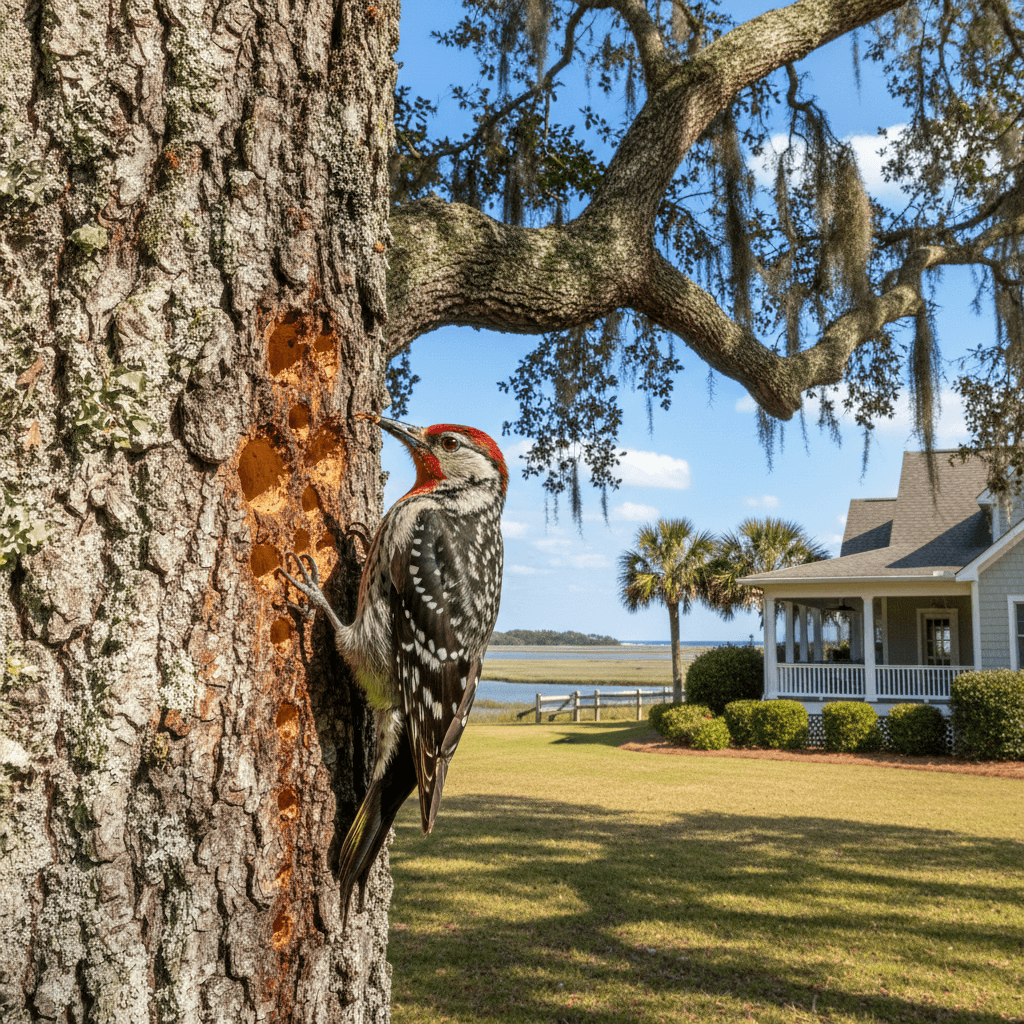
Yellow-bellied Sapsuckers are medium-sized woodpeckers with a distinctive pattern. They have a red forehead and throat (in males), a black and white face pattern, and a yellowish wash on their lower breast and belly. Look for their white wing patch in flight.
Signs of Infestation
Sapsuckers leave distinctive rows of small, shallow holes in tree bark, often arranged in neat horizontal or vertical lines. These sapwells can attract other insects, which the sapsuckers then feed on. Repeated drilling can weaken or even kill young or stressed trees in your Myrtle Beach yard.
Health Risks
Yellow-bellied Sapsuckers pose no direct health risks to humans. However, their feeding habits can damage ornamental trees in Myrtle Beach landscapes. The sapwells they create can also attract stinging insects like wasps, posing an indirect risk.
Our Treatment Method
MBPC does not directly handle bird control, as Yellow-bellied Sapsuckers are protected under the Migratory Bird Treaty Act. However, we can offer advice on deterrents and protecting vulnerable trees. Contact the SC Department of Natural Resources for further guidance.
Prevention Tips
Wrap vulnerable trees with burlap or hardware cloth to deter sapsuckers from drilling. Remove dead or dying trees, as they are more attractive to these woodpeckers. Encourage a healthy ecosystem in your Myrtle Beach yard by providing a water source and planting native trees that can withstand sapsucker damage.
Habitat
Yellow-bellied Sapsuckers are migratory birds that visit the Myrtle Beach area primarily during the non-breeding season. They prefer wooded areas, parks, and suburban gardens with a variety of trees. They are commonly seen in coastal South Carolina from fall through spring.
Peak activity: Fall-Winter
Identification Photos
Frequently Asked Questions About Yellow-bellied Sapsucker
Yes, Yellow-bellied Sapsuckers are protected under the Migratory Bird Treaty Act. It is illegal to harm, harass, or kill them or destroy their nests. Contact the SC Department of Natural Resources for guidance on managing sapsucker damage in Myrtle Beach.
Sapsuckers are attracted to trees with high sap content, such as birch, maple, hickory, and pine. Young or stressed trees are particularly vulnerable to damage in Myrtle Beach landscapes.
While repeated sapsucker damage can weaken or kill young or stressed trees, most mature trees can tolerate some sapwell damage. Monitor the tree's health and consult an arborist if you notice signs of decline in your Myrtle Beach yard.
Wrapping the trunks of vulnerable trees with burlap or hardware cloth is an effective deterrent. You can also try hanging shiny objects or noisemakers to scare them away from your Myrtle Beach property.
Don't Let Pests Win.
Take Back Your Home Today.
Every day you wait gives pests more time to multiply and cause damage. Our licensed technicians are ready to help — often the same day you call.
Free Inspection
No cost, no obligation
Same-Day Service
Fast response guaranteed
Eco-Friendly
Safe for family & pets
100% Guarantee
Pests return, so do we
Ready to get started?
Choose how you'd like to connect with us.
Available Mon-Fri 8am-6pm, Sat 9am-2pm