
Bats
Chiroptera (various species)
wildlifeHow to Identify
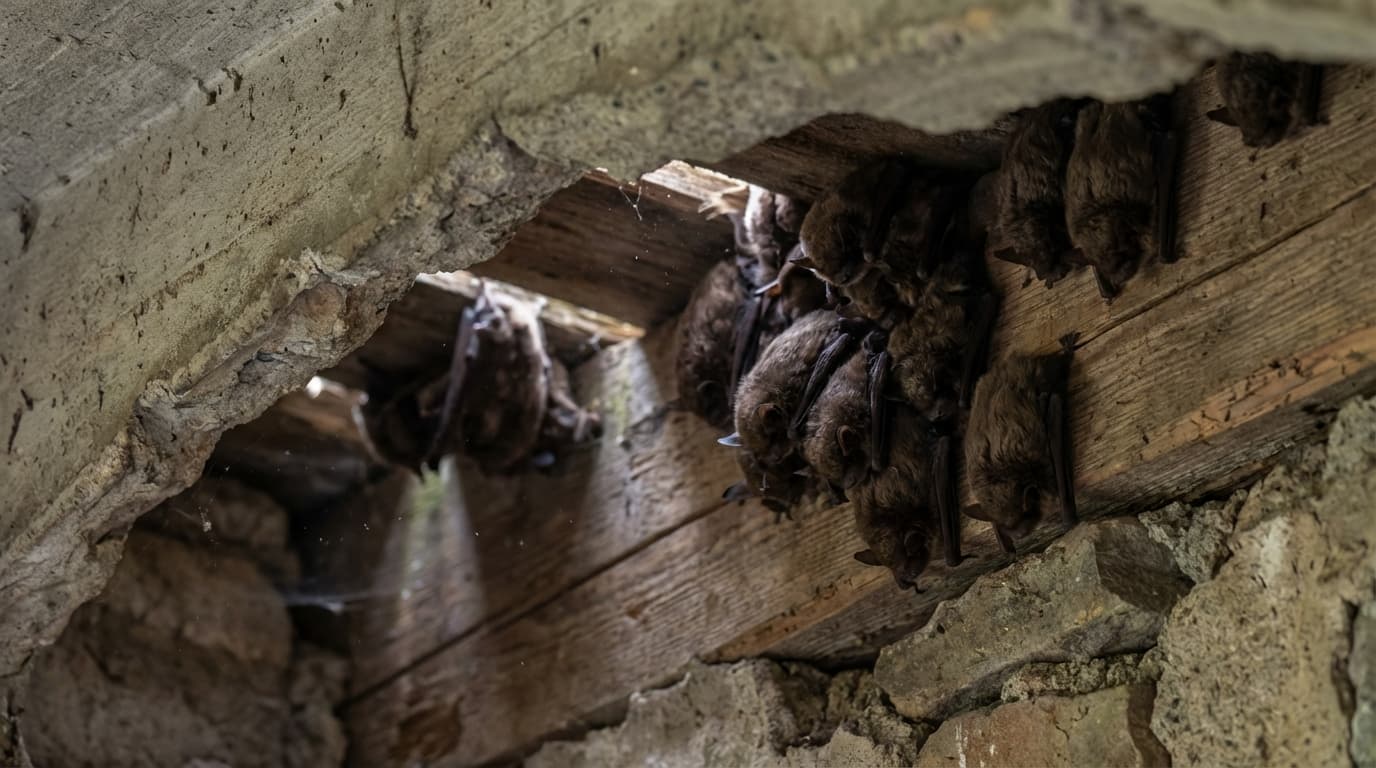
Bats are the only mammals capable of true flight. The most common species found in Grand Strand homes are the big brown bat (about 5 inches long with a 12-inch wingspan) and the Brazilian free-tailed bat (about 3.5 inches with a 12-inch wingspan). Both species have brown fur, large ears, and leathery wings. At dusk, bats can be seen flying in erratic patterns as they pursue insects. Bats roosting in attics are often first detected by sounds — high-pitched squeaking and scratching — particularly at dawn and dusk.
Signs of Infestation
Bat droppings (guano) are the most reliable sign — they resemble mouse droppings but crumble easily when pressed and contain shiny insect parts. Guano accumulates below roost entry points, in attic spaces, and on exterior walls beneath gaps. You may hear squeaking, scratching, or fluttering sounds at dawn and dusk as bats enter and exit. Dark brown staining around gaps in the roofline, soffits, or gable vents indicates an established entry point where body oils have accumulated.
Health Risks
Bats are the primary carrier of rabies in SC — any bat contact should be reported to your local health department. Accumulated bat guano can harbor the fungus Histoplasma capsulatum, which causes histoplasmosis, a serious respiratory illness, when disturbed. Bat bugs (similar to bed bugs) can also migrate into living spaces from bat roosts. Professional guano cleanup with respiratory protection is recommended for significant accumulations. MBPC offers this service – call +1-843-555-0199.
Our Treatment Method
Bat exclusion is the only legal and effective method — bats are protected wildlife, and it is illegal to kill them in SC. MBPC installs one-way exclusion devices over active entry points, allowing bats to exit at dusk but preventing re-entry. After all bats have departed (typically 3-7 days), entry points are permanently sealed. Exclusion cannot be performed during the maternity season (May-August) when flightless pups are present. Guano cleanup and sanitization are performed after exclusion, protecting your family from the risks associated with bat waste.
Prevention Tips
At dusk, inspect your Myrtle Beach home's roofline for bats entering and exiting – this pinpoints active entry points. Seal all gaps larger than 3/8 inch along the roofline, soffit-to-fascia joints, around gable vents, and behind loose flashing before bat season. Do not seal entry points between May and August when flightless pups may be trapped inside. If you find guano or hear bat sounds, schedule an inspection with MBPC at +1-843-555-0199.
Habitat
In Myrtle Beach and the Grand Strand, bats frequently roost in attic spaces, behind shutters, under loose siding, and behind fascia boards of homes near coastal marshes, tidal creeks, and palmetto stands. They exploit gaps as small as 3/8 inch – any space a pencil can fit through. Our subtropical coastal climate and abundant insect population make the area ideal bat habitat. Big brown bats and Brazilian free-tailed bats are colonial, with dozens or even hundreds occupying a single attic.
Peak activity: Spring-Fall
Identification Photos
Frequently Asked Questions About Bats
Yes. All bat species in SC are protected wildlife. It is illegal to kill or poison bats. The only legal removal method is professional exclusion – installing one-way devices that allow bats to leave but not return. In the Myrtle Beach area, exclusion must be timed to avoid the maternity season (May-August) when flightless pups are present.
While the overall rabies rate in bats is low (less than 1%), bats are the primary rabies vector in SC. Any direct bat contact – including finding a bat in a room where you slept – should be reported to your local health department. Do not handle bats with bare hands under any circumstances. Call your doctor and the SC Department of Health and Environmental Control.
Histoplasmosis is a respiratory illness caused by inhaling spores of the fungus Histoplasma capsulatum, which grows in bat guano. Disturbing accumulated guano (sweeping, shoveling) releases spores into the air. Professional guano cleanup with proper respiratory protection and HEPA filtration is recommended for significant accumulations. MBPC offers this service in the Myrtle Beach area – call +1-843-555-0199.
The ideal exclusion windows in Myrtle Beach are early spring (March-April) before pups are born, or early fall (September-October) after pups are flying. Exclusion must never be performed during the maternity season (May through August) when flightless pups in the attic would be trapped and die, creating odor and sanitation problems. Call MBPC to schedule: +1-843-555-0199.
Related Pests
Don't Let Pests Win.
Take Back Your Home Today.
Every day you wait gives pests more time to multiply and cause damage. Our licensed technicians are ready to help — often the same day you call.
Free Inspection
No cost, no obligation
Same-Day Service
Fast response guaranteed
Eco-Friendly
Safe for family & pets
100% Guarantee
Pests return, so do we
Ready to get started?
Choose how you'd like to connect with us.
Available Mon-Fri 8am-6pm, Sat 9am-2pm