
Squirrels
Sciurus carolinensis
wildlifeHow to Identify
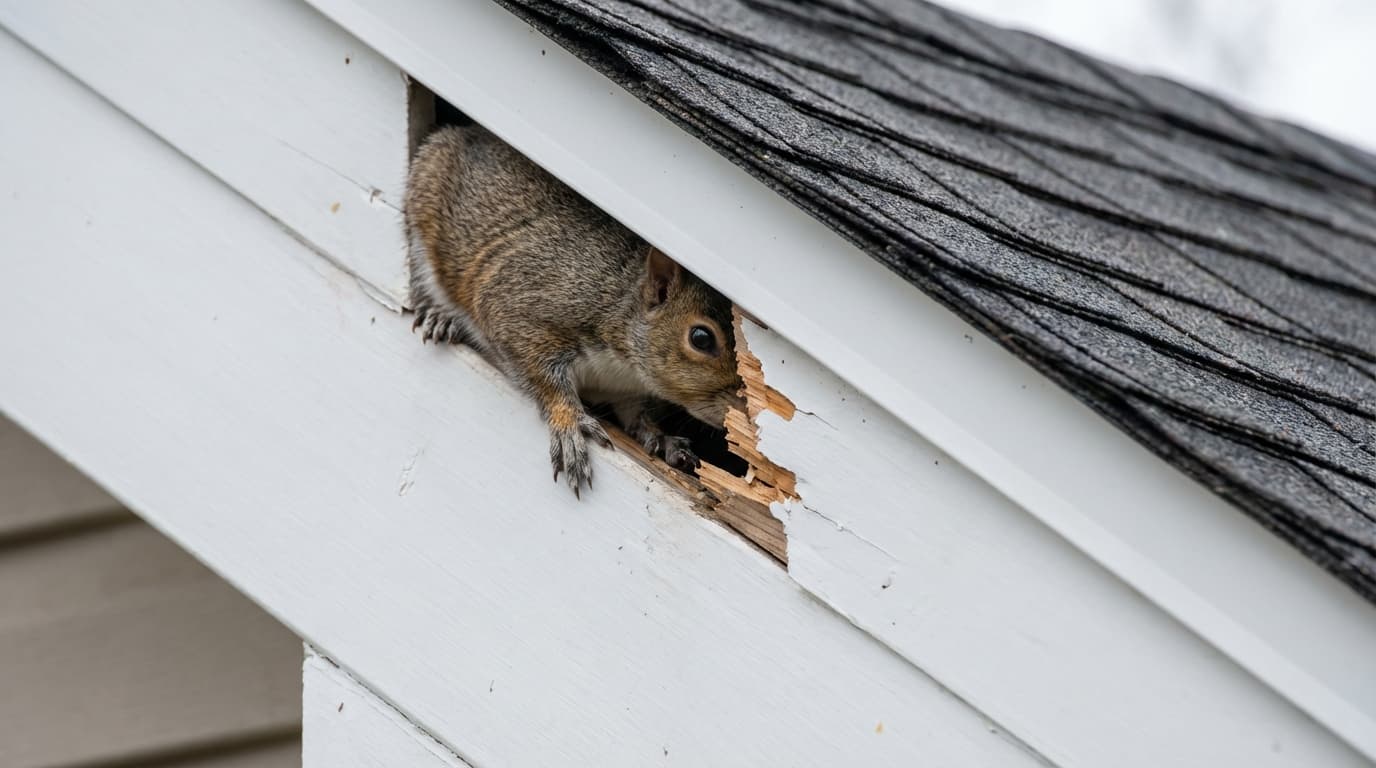
Eastern gray squirrels are the most common attic-invading species in the Myrtle Beach area, measuring 16-20 inches total length including their bushy tail. They have gray fur with lighter underparts and may show reddish-brown tinges. Flying squirrels are smaller (8-10 inches) with large dark eyes, a gliding membrane between front and back legs, and are strictly nocturnal. Red squirrels are small (11-14 inches) with reddish fur and are especially vocal. Squirrel sounds in the attic are louder and more persistent than rodent activity.
Signs of Infestation
Loud scrambling, running, and gnawing sounds in the attic, especially in early morning and late afternoon, are the most common indicator. Look for chewed-out entry holes 2-3 inches in diameter at soffit returns, gable vents, roof-to-wall intersections, and around plumbing vents. Squirrel droppings are slightly larger than rat droppings and more rounded. You may notice damaged fascia boards, chewed soffit material, or leaf and twig nesting material visible at entry points.
Health Risks
Squirrels in Myrtle Beach don't typically transmit diseases to humans directly, but their nests can harbor parasites including fleas, ticks, and mites that can migrate into living spaces. Their droppings and urine contaminate attic insulation in SC homes, reducing its effectiveness and creating odor, particularly problematic in our humid subtropical climate. The primary risk is property damage — squirrels gnaw on electrical wiring, which is a documented cause of attic fires. They can also damage HVAC ductwork, plumbing, and stored items.
Our Treatment Method
MBPC uses humane trapping and one-way exclusion doors to remove squirrels from attic spaces in the Grand Strand. Live traps are set at or near entry points and checked daily. Once all squirrels have been removed, entry points are permanently sealed with heavy-gauge galvanized hardware cloth, metal flashing, or steel plates that squirrels cannot chew through. Tree branches providing roof access are identified for trimming. Damaged insulation and contaminated areas are cleaned and restored as needed to prevent mold growth in our humid SC climate.
Prevention Tips
Trim all tree branches at least 6-8 feet from the roofline — squirrels can jump 8-10 feet horizontally. Install hardware cloth over gable vents and soffit vents, especially important in older homes along the Grand Strand. Repair any damaged or soft wood trim along the roofline before squirrels exploit it, as our humid subtropical climate accelerates wood rot. Remove bird feeders or switch to squirrel-proof designs, as feeders attract squirrels to your property and encourage them to explore the roofline.
Habitat
Eastern gray squirrels nest in tree cavities and leaf nests (dreys) but commonly invade attic spaces in Myrtle Beach homes, especially during fall and winter for warmth and during spring for birthing. They enter through gaps at roofline intersections, damaged soffit material, gable vents, and by gnawing through wood trim. Flying squirrels enter through surprisingly small gaps and can colonize attics in large numbers. The Grand Strand's wooded residential lots with mature live oaks, palmetto trees and hardwoods near salt marshes and tidal creeks provide abundant squirrel populations adjacent to homes built on sandy soils.
Peak activity: Fall-Winter
Identification Photos
Frequently Asked Questions About Squirrels
Squirrels are powerful gnawers and agile climbers. In the Myrtle Beach area, they typically enter attics by gnawing through wood trim at soffit returns, roof-to-wall intersections, and around gable vents. They can jump 8-10 feet from tree branches to the roofline. Once they find a weak point, they can chew a 2-3 inch entry hole in just a few hours. Our older homes are especially vulnerable.
Yes. Squirrels constantly gnaw to maintain their teeth, and electrical wiring in attics is a common target in SC homes. Damaged wiring insulation can lead to electrical shorts and attic fires. Insurance companies report that rodent and squirrel damage to wiring is a leading cause of attic fires in residential structures in the US.
Eastern gray squirrels typically have two litters per year — one in early spring (February-March) and one in late summer (August-September). Each litter contains 2-4 young that remain in the nest for about 10 weeks. In Myrtle Beach, exclusion work must account for nesting seasons to avoid trapping flightless young in the attic.
No. Once squirrels establish an attic nest in your Myrtle Beach home, they will not voluntarily leave. Attics provide ideal shelter from weather and predators, and squirrels will defend their territory and return even after temporary displacement. Professional exclusion by MBPC with permanent sealing of entry points is the only effective long-term solution.
Related Pests
Don't Let Pests Win.
Take Back Your Home Today.
Every day you wait gives pests more time to multiply and cause damage. Our licensed technicians are ready to help — often the same day you call.
Free Inspection
No cost, no obligation
Same-Day Service
Fast response guaranteed
Eco-Friendly
Safe for family & pets
100% Guarantee
Pests return, so do we
Ready to get started?
Choose how you'd like to connect with us.
Available Mon-Fri 8am-6pm, Sat 9am-2pm