
Earwigs
Forficula auricularia
insectsHow to Identify
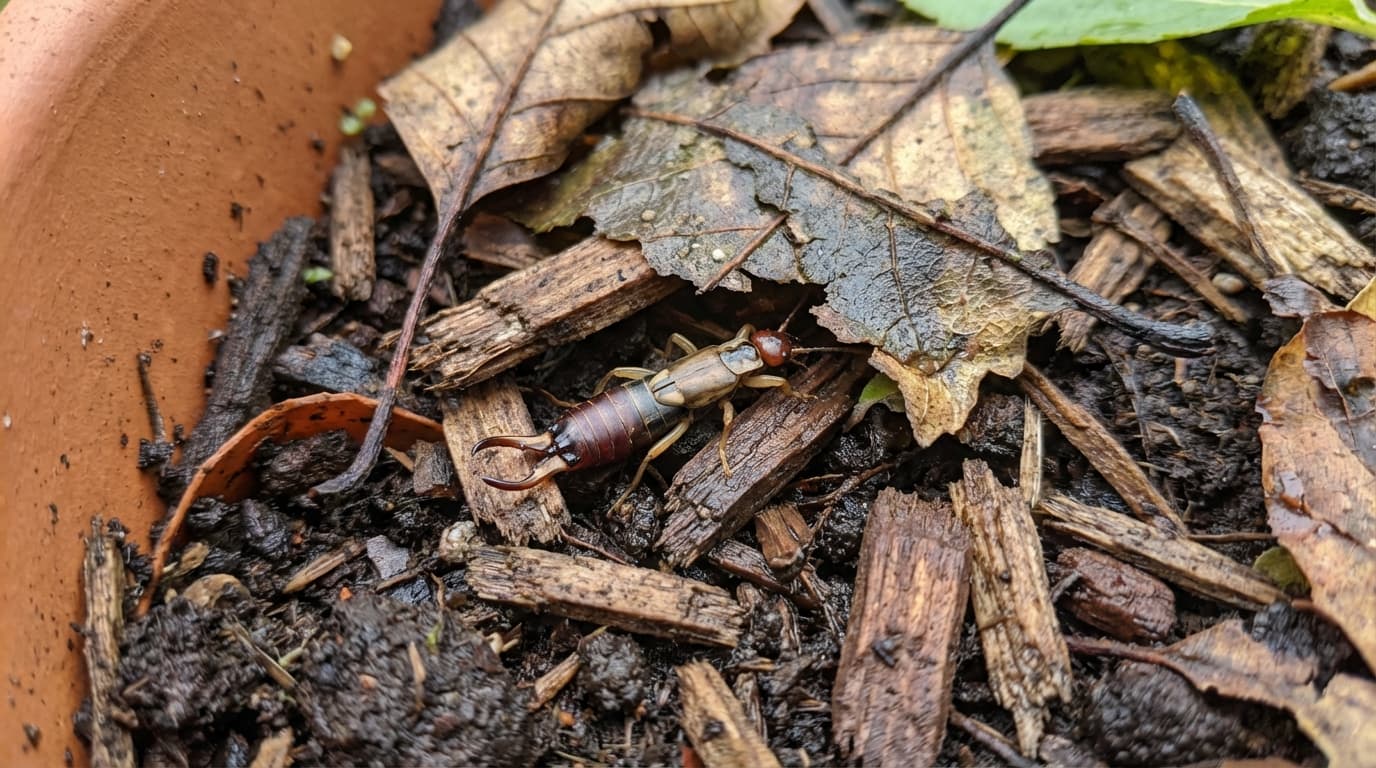
Earwigs are elongated, flattened insects about 5/8 to 1 inch long with reddish-brown to dark brown bodies. Their most distinctive feature is a pair of curved, pincer-like appendages (cerci) at the rear of the abdomen — males have curved pincers while females have straighter ones. They have short, stubby wings but rarely fly. Their antennae are thread-like with 10-14 segments. Despite their alarming appearance, earwigs are largely harmless to humans.
Signs of Infestation
Earwigs are nocturnal and hide in damp, dark locations during the day. You may find them under flowerpots, mulch, landscape timbers, stones, and in damp basements or laundry rooms. They are attracted to lights at night and often congregate around porch lights and illuminated doorways. Finding multiple earwigs indoors, particularly in bathrooms and kitchens, suggests they are entering through gaps around doors, windows, or the foundation.
Health Risks
Earwigs pose minimal health risks in Myrtle Beach, SC. Their pincers can deliver a mild pinch if handled but cannot break skin or inject venom. The common myth that earwigs crawl into human ears is false. They do not transmit diseases. Their primary nuisance is their alarming appearance and their tendency to invade homes in large numbers, particularly during periods of high humidity common in our subtropical coastal climate.
Our Treatment Method
MBPC utilizes granular insecticide baits around the foundation perimeter and in mulch beds, targeting earwig harborage areas. Residual liquid treatments are applied to foundation walls, door thresholds, and window frames to create a protective barrier. Interior crack-and-crevice treatments address entry points in bathrooms, laundry rooms, and basements. Long-term management focuses on reducing exterior moisture and eliminating harborage sites around your Myrtle Beach, SC home.
Prevention Tips
To deter earwigs around your Myrtle Beach home, create a dry perimeter around your foundation by pulling mulch back at least 6 inches and minimizing ground cover plantings near the house. This is especially important in Grand Strand neighborhoods with lush landscaping. Switch exterior lights to yellow or sodium vapor bulbs, which are less attractive to insects. Seal gaps around doors, windows, and utility penetrations with weatherstripping and caulk. Fix leaky outdoor faucets and ensure proper drainage away from the foundation. Adjust irrigation schedules to water early in the morning, allowing beds to dry during the day and reducing the moist nighttime conditions that earwigs prefer in our SC coastal environment.
Habitat
Earwigs thrive in the damp, dark environments common in the Grand Strand. Outdoors, they seek shelter under mulch, rocks, landscape timbers, leaf litter, and ground cover plantings. They're often found in gardens, feeding on decaying plant matter, soft-bodied insects, and sometimes living plant tissues. Indoors, they gravitate towards bathrooms, laundry rooms, basements, and kitchens. Myrtle Beach's subtropical coastal climate, with its high humidity, sandy soils, and proximity to salt marshes and tidal creeks, provides ideal conditions for earwig populations. Properties with irrigated lawns, palmetto trees, and heavy mulch beds are particularly susceptible.
Peak activity: Spring-Summer
Identification Photos
Frequently Asked Questions About Earwigs
No — this is one of the most persistent myths in entomology. Earwigs have no interest in human ears and do not seek them out. The name likely originated from old European folklore. While any small insect could theoretically wander into an ear accidentally, earwigs are no more likely to do so than any other bug in Myrtle Beach, SC.
Earwigs can pinch with their cerci if handled, but the pinch is mild and cannot break skin or inject venom. They use their pincers primarily for defense against predators and during mating. If an earwig pinches you in Myrtle Beach, simply brush it off — no medical attention is needed.
Earwigs often invade Myrtle Beach homes during periods of high humidity or drought when outdoor conditions become unfavorable. They seek moisture and cooler temperatures, entering through gaps around doors, windows, and foundation cracks. Heavy mulch, ground cover, and landscape timbers near the foundation provide staging areas for indoor invasion in the Grand Strand.
Earwigs are actually somewhat beneficial in gardens — they feed on aphids, mites, and other soft-bodied pest insects. However, in large numbers, they can damage seedlings, soft fruits like strawberries, and flower petals. Their garden impact is generally minimal compared to their nuisance value when they invade homes in the Myrtle Beach, SC area.
Related Pests
Don't Let Pests Win.
Take Back Your Home Today.
Every day you wait gives pests more time to multiply and cause damage. Our licensed technicians are ready to help — often the same day you call.
Free Inspection
No cost, no obligation
Same-Day Service
Fast response guaranteed
Eco-Friendly
Safe for family & pets
100% Guarantee
Pests return, so do we
Ready to get started?
Choose how you'd like to connect with us.
Available Mon-Fri 8am-6pm, Sat 9am-2pm