
House Mouse
Mus musculus
rodentsHow to Identify
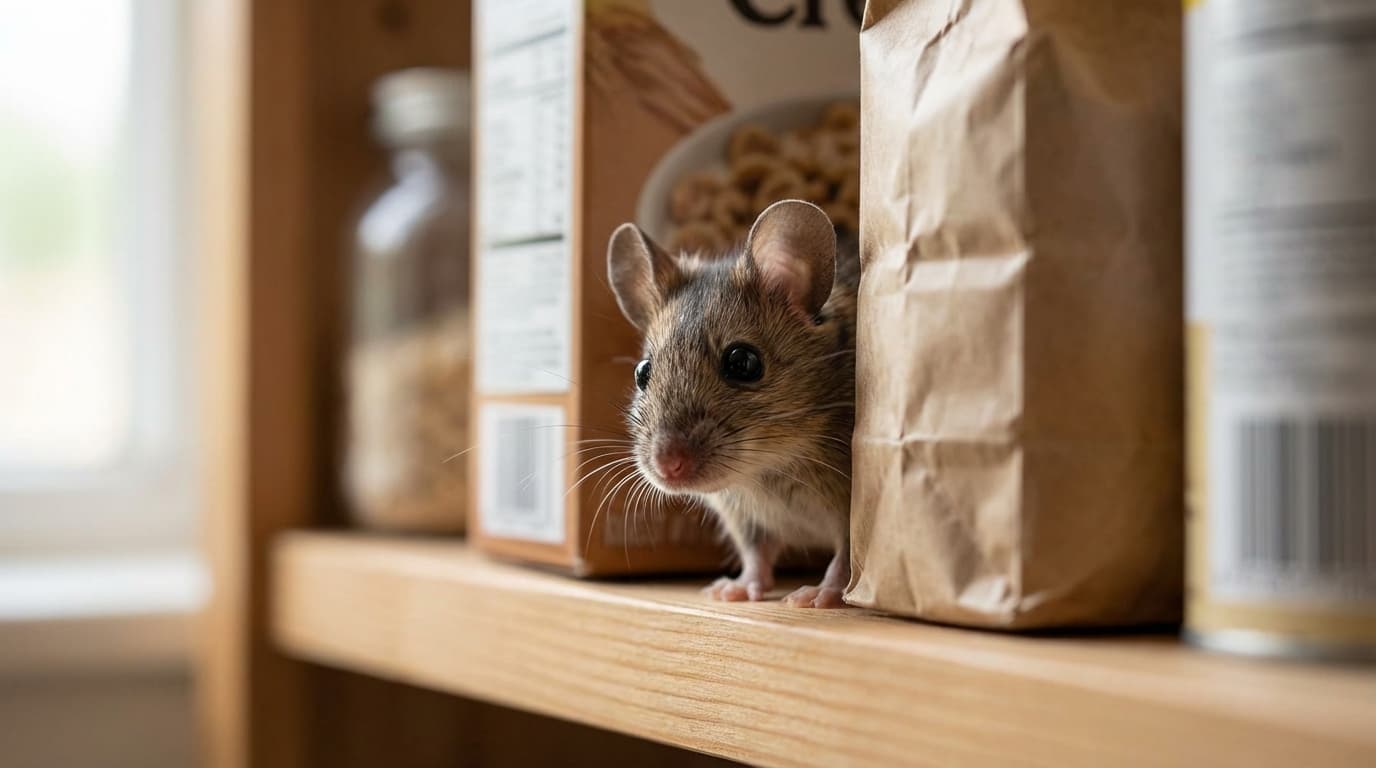
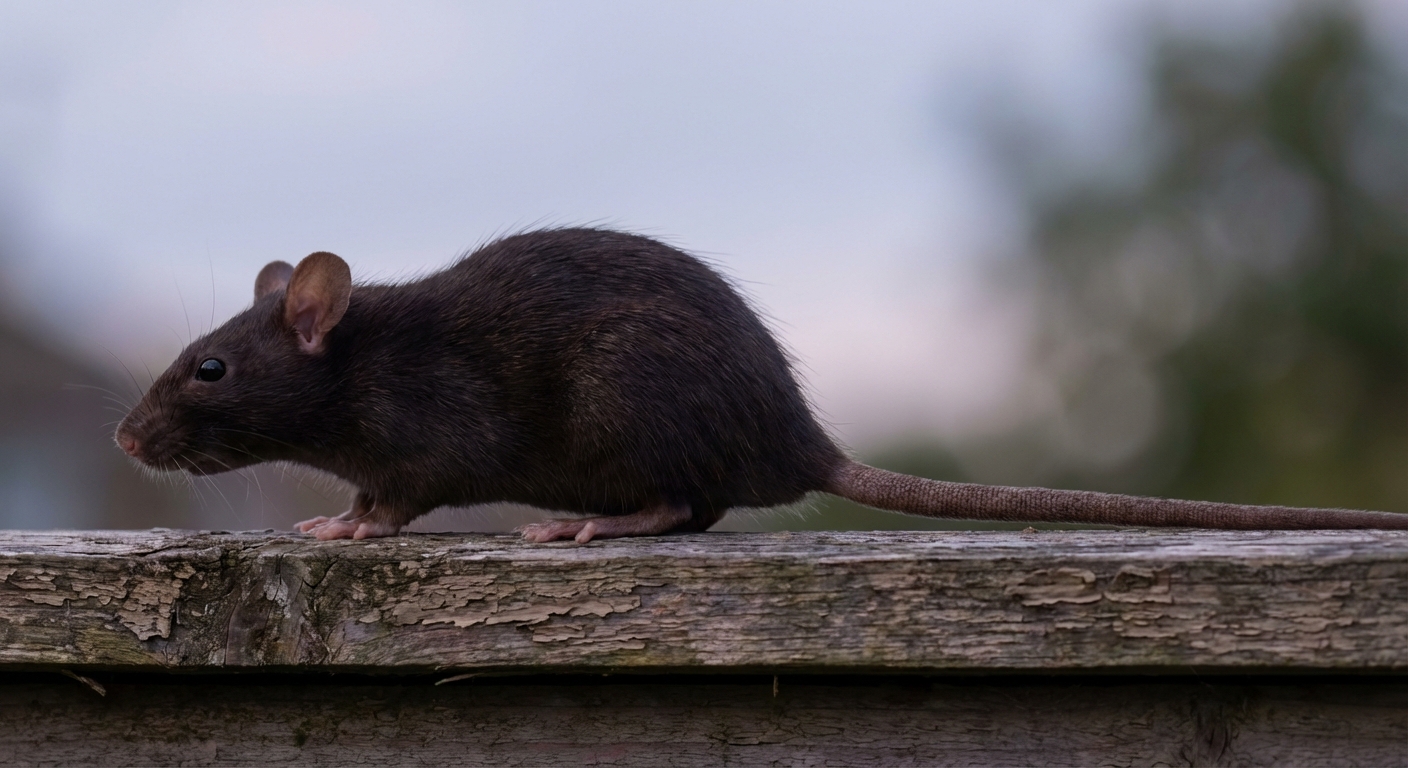
House mice are small rodents measuring 2.5-4 inches in body length with a tail equally long. They have light brown to gray fur with a lighter belly, large rounded ears relative to their body, and a pointed nose. Their droppings are rod-shaped, about 1/4 inch long with pointed ends — much smaller than rat droppings. Mice weigh only 1/2 to 1 ounce. They are excellent climbers and can squeeze through gaps as small as 1/4 inch — roughly the diameter of a pencil.
Signs of Infestation
Mouse droppings are the most common sign — small, dark, rod-shaped pellets about 1/4 inch long, found in kitchen drawers, under sinks, along baseboards, and in pantries. You may hear scratching or scurrying in walls and ceilings, particularly at night. Gnaw marks on food packaging, soap bars, and candles are telltale signs. Look for greasy rub marks along baseboards where mice repeatedly travel, and shredded paper, fabric, or insulation used for nesting material.
Health Risks
House mice contaminate far more food than they consume through droppings, urine, and fur. They can transmit salmonellosis, leptospirosis, and lymphocytic choriomeningitis virus (LCMV). Mouse urine and dander are significant allergens, particularly problematic for children with asthma in SC. A single mouse produces 40-100 droppings per day, rapidly contaminating kitchen and pantry areas. Their gnawing on electrical wiring also creates a fire hazard.
Our Treatment Method
Our mouse control program at MBPC begins with a comprehensive inspection to identify entry points, travel routes, nesting sites, and food sources. Interior snap traps are placed along walls and in areas of high activity — mice travel along edges and rarely cross open spaces. Exterior bait stations are positioned along foundation walls to intercept mice before they enter. Structural exclusion — sealing all gaps larger than 1/4 inch — is the most critical component for permanent control in our subtropical coastal environment.
Prevention Tips
Seal all gaps larger than 1/4 inch around the foundation, utility penetrations, dryer vents, and where pipes enter the structure using steel wool, copper mesh, or metal flashing – MBPC can help with this. Store all pantry food in glass, metal, or heavy plastic containers. Keep kitchen counters clear of crumbs and dirty dishes. Declutter storage areas — mice prefer nesting in undisturbed boxes and clutter. If you own a seasonal or vacation property along the Grand Strand, remove all perishable food before closing up, and consider ongoing exterior bait station monitoring by MBPC during vacancy periods to prevent mice from establishing nests while the home sits empty.
Habitat
House mice are commensal rodents, meaning they have evolved to live closely with humans. In the Grand Strand, they nest inside wall voids, behind appliances, under cabinets, in attic insulation, and inside stored boxes and clutter. They need only a tiny amount of food daily (1/10 ounce) and can survive without free water by metabolizing moisture from food. Our mild coastal winters in SC mean mice remain active year-round outdoors — there is no hard seasonal freeze forcing mass migration indoors. Instead, mice move freely between indoor and outdoor harborage in all seasons. Vacation properties and seasonal homes along the coast are particularly vulnerable during vacancy periods when mice establish nests undisturbed for weeks or months at a time.
Peak activity: Fall-Winter
Identification Photos
Frequently Asked Questions About House Mouse
Mice can squeeze through any gap larger than 1/4 inch — about the size of a pencil. Common entry points in Myrtle Beach, SC, include gaps around utility pipes, AC lines, dryer vents, garage door seals, and where siding meets the foundation. They are also excellent climbers and can enter through gaps around the roofline and soffit, especially in older homes with palmetto trees nearby.
Almost certainly. Mice are social animals and rarely live alone. Where there is one in your Myrtle Beach, SC, home, there are likely more. A female mouse can produce 5-10 litters per year with 5-6 pups each, so a small problem can become a large infestation quickly. Early intervention with professional trapping and exclusion by MBPC is critical.
Yes. Mice contaminate surfaces and food with droppings, urine, and fur, potentially transmitting salmonellosis, leptospirosis, and LCMV to Myrtle Beach residents. A single mouse produces 40-100 droppings daily. Mouse allergens are a leading trigger of childhood asthma. Professional cleanup of heavy contamination is recommended.
Independent research consistently shows that ultrasonic repellers do not effectively deter mice in Myrtle Beach, SC. Mice quickly habituate to the sound, and the devices have no effect on established populations. Professional exclusion (sealing entry points) combined with trapping by MBPC is the only proven long-term solution.
Related Pests
Confused About What You're Seeing?
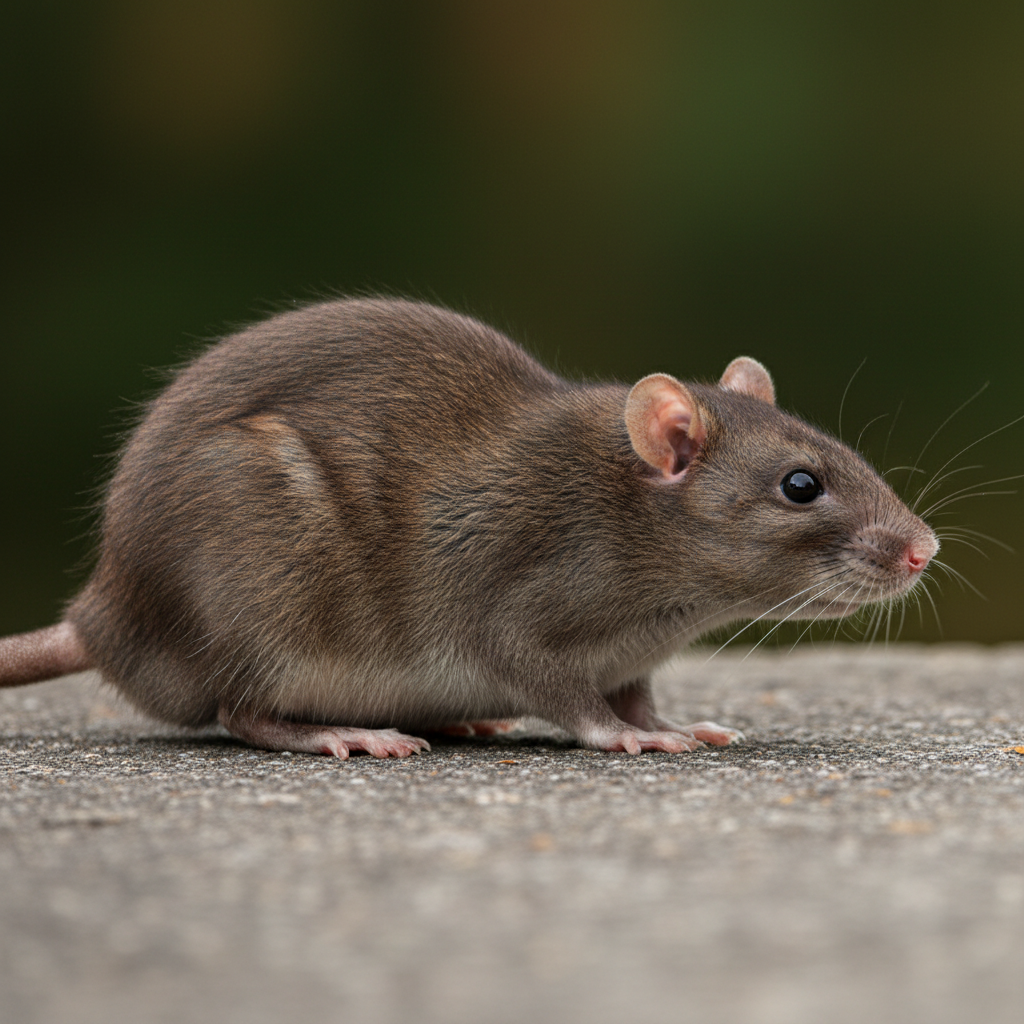
House Mouse vs. Norway Rat — compare side by side to know for sure.
Open Comparison ToolDon't Let Pests Win.
Take Back Your Home Today.
Every day you wait gives pests more time to multiply and cause damage. Our licensed technicians are ready to help — often the same day you call.
Free Inspection
No cost, no obligation
Same-Day Service
Fast response guaranteed
Eco-Friendly
Safe for family & pets
100% Guarantee
Pests return, so do we
Ready to get started?
Choose how you'd like to connect with us.
Available Mon-Fri 8am-6pm, Sat 9am-2pm