
Ticks
Ixodidae (various species)
arachnidsHow to Identify
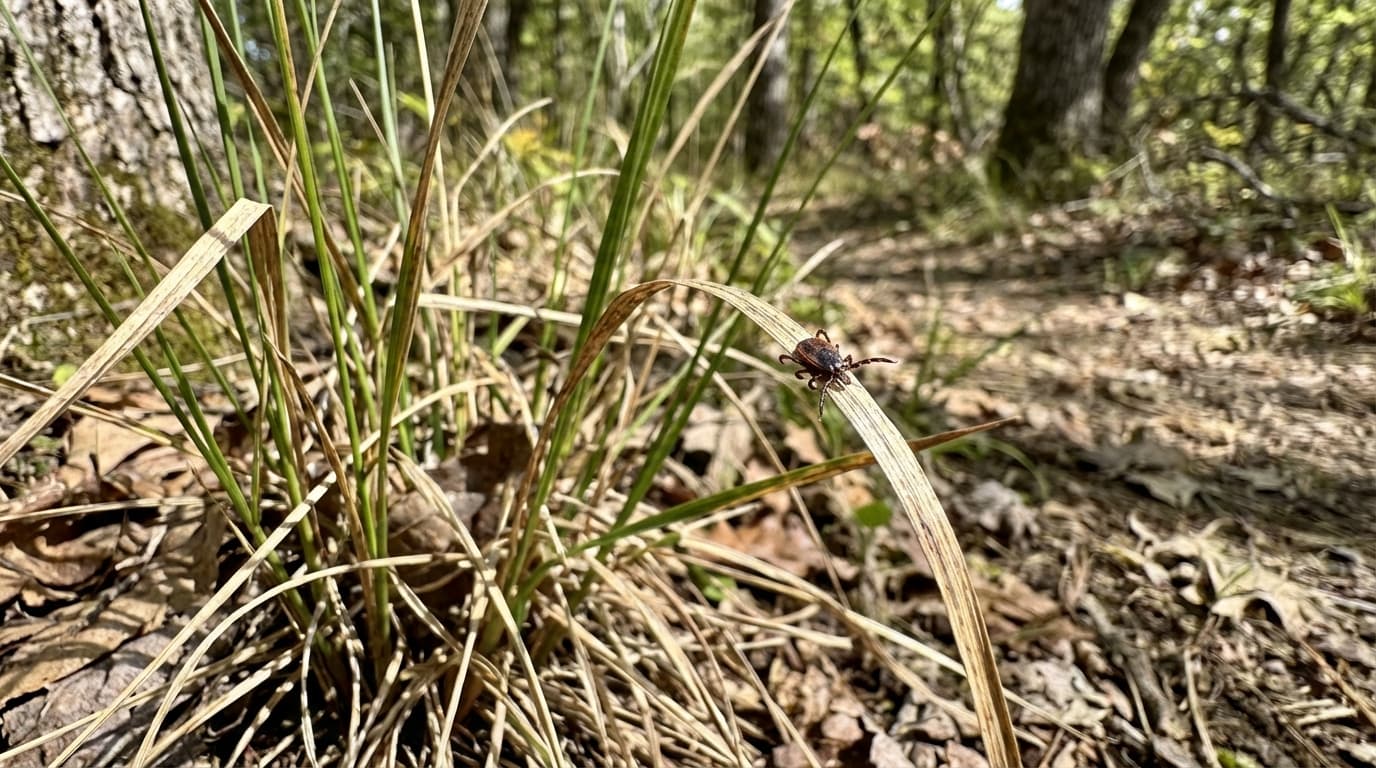
Ticks are small, flat, oval-shaped arachnids (not insects) with eight legs. Unfed adults range from the size of a sesame seed (deer tick) to a small watermelon seed (dog tick, lone star tick). After feeding, they become engorged and can swell to the size of a raisin. The three most common species in coastal South Carolina are the blacklegged tick (deer tick), the American dog tick, and the lone star tick — identified by the single white dot on the female's back. Ticks do not jump or fly; they quest on vegetation with outstretched front legs.
Signs of Infestation
Finding ticks attached to your skin, pets, or clothing after spending time outdoors is the primary indicator. Check around the hairline, behind ears, in armpits, around the waist, and behind knees — ticks prefer warm, concealed areas. On pets, check around ears, between toes, and under collars. Seeing ticks questing (reaching upward with front legs) on tall grass, brush, or leaf litter edges along trails and yard perimeters indicates an active outdoor population.
Health Risks
Ticks are among the most medically significant pests in Myrtle Beach, SC. Blacklegged ticks transmit Lyme disease, anaplasmosis, and babesiosis. Lone star ticks can cause ehrlichiosis, STARI (Southern Tick-Associated Rash Illness), and alpha-gal syndrome (red meat allergy). American dog ticks transmit Rocky Mountain spotted fever. Prompt tick removal within 24-36 hours significantly reduces disease transmission risk for most tick-borne illnesses.
Our Treatment Method
MBPC's tick reduction program targets the landscape zones where ticks are most active in the Grand Strand — the transition area between lawn and palmetto thickets, along sandy trails and walkways, and in shaded, leaf-littered perimeter zones. We apply residual acaricide treatments to these tick habitat areas. Granular treatments in mulch beds and ground cover reduce tick populations at ground level. Our technicians may also recommend deer deterrent strategies, as white-tailed deer are a primary host for adult blacklegged ticks.
Prevention Tips
In Myrtle Beach, SC, create a 3-foot wide gravel or wood chip barrier between your lawn and any palmetto thickets to discourage tick migration. Keep grass mowed short and remove leaf litter from yard edges. Wear light-colored clothing and apply EPA-registered repellent containing DEET or picaridin when hiking or working in wooded areas. Perform thorough tick checks on all family members and pets after outdoor activities.
Habitat
Ticks thrive in the humid, shaded areas with leaf litter and low vegetation common in Myrtle Beach, SC. In residential settings, the highest-risk zones are the transition between maintained lawn and natural woodland or brush — the so-called 'tick zone.' They also inhabit mulch beds, ground cover plantings, stone walls, and areas frequented by deer and other wildlife hosts near tidal creeks and salt marshes. The Grand Strand's wooded lots, marshland edges, and abundant deer population create significant tick exposure risk, especially in neighborhoods bordering undeveloped land.
Peak activity: Spring-Fall
Identification Photos
Frequently Asked Questions About Ticks
The three most significant tick-borne diseases in the Myrtle Beach area are Lyme disease (from blacklegged/deer ticks), ehrlichiosis (from lone star ticks), and Rocky Mountain spotted fever (from American dog ticks). Lone star ticks can also cause alpha-gal syndrome, an allergy to red meat. Prompt tick removal within 24-36 hours significantly reduces transmission risk.
Use fine-tipped tweezers to grasp the tick as close to the skin as possible and pull upward with steady, even pressure. Do not twist, jerk, or squeeze the tick's body. After removal, clean the bite area with rubbing alcohol or soap and water. Save the tick in a sealed bag for identification if symptoms develop, especially given the prevalence of Lyme disease in SC.
Most tick species cannot survive long indoors in Myrtle Beach homes due to low humidity from air conditioning. However, the brown dog tick is an exception — it can complete its entire life cycle indoors and establish infestations in homes. If you find multiple ticks indoors without recent outdoor exposure, a brown dog tick infestation should be investigated.
Tick activity in coastal South Carolina runs from March through November, with peak exposure typically April through July. However, the mild coastal winters mean blacklegged ticks can be active on any winter day above 40 degrees F. Year-round vigilance is recommended for outdoor activities in our area, especially when enjoying the beaches and trails.
Related Pests
Don't Let Pests Win.
Take Back Your Home Today.
Every day you wait gives pests more time to multiply and cause damage. Our licensed technicians are ready to help — often the same day you call.
Free Inspection
No cost, no obligation
Same-Day Service
Fast response guaranteed
Eco-Friendly
Safe for family & pets
100% Guarantee
Pests return, so do we
Ready to get started?
Choose how you'd like to connect with us.
Available Mon-Fri 8am-6pm, Sat 9am-2pm