Yellowjackets
Vespula spp.
insectsHow to Identify
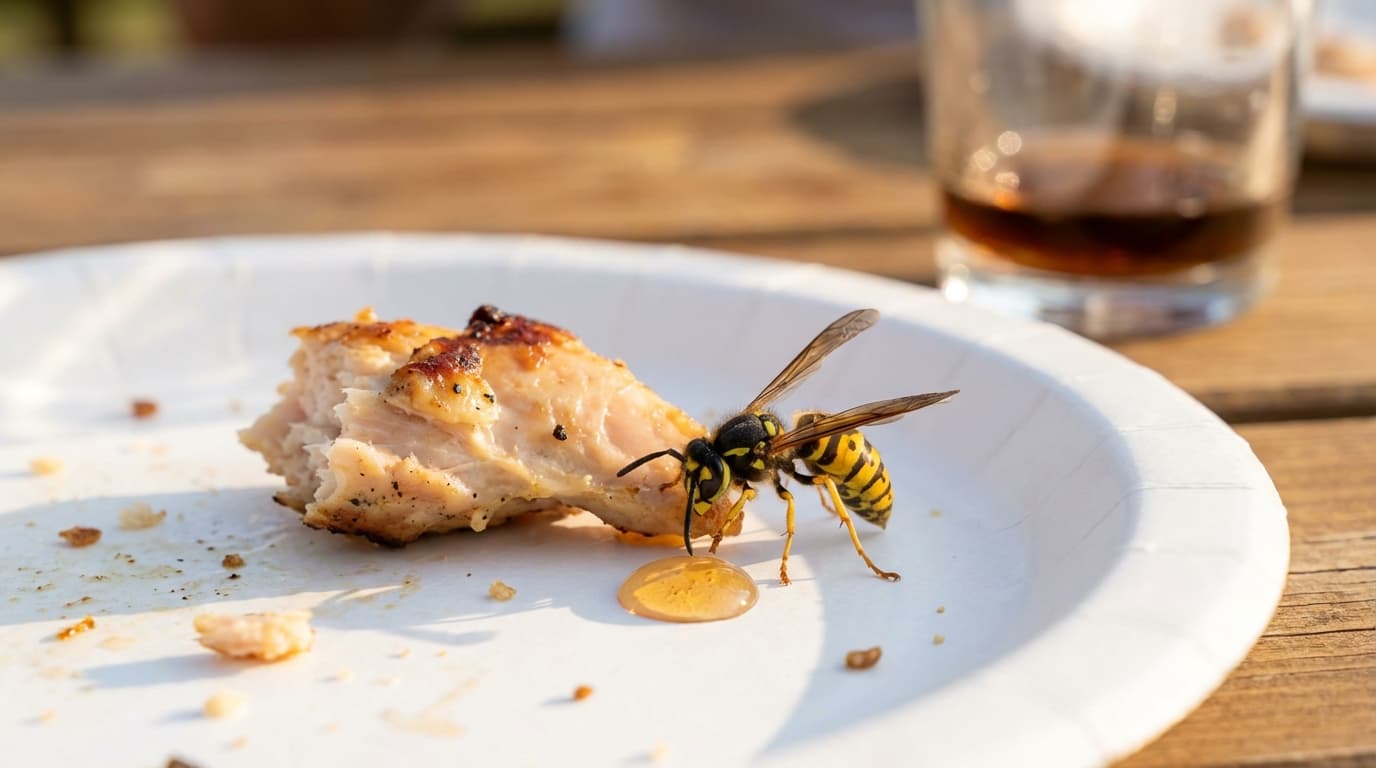
Yellowjackets are about 1/2 inch long with distinctive bright yellow and black banded patterns on their smooth, shiny abdomen. Unlike bees, they have a thin waist between the thorax and abdomen and lack visible body hair. They fold their wings lengthwise when at rest. Workers are aggressive, especially in late summer and fall, and can sting multiple times without losing their stinger. They are often confused with honeybees but are more slender and brightly colored.
Signs of Infestation
Yellowjackets become increasingly aggressive and visible from August through October as colonies reach peak size and natural food sources decline. Watch for workers flying in and out of a specific ground hole, wall void, or soffit gap in a steady traffic pattern. Ground nests appear as small holes in lawns, garden beds, or along walkways with a constant stream of wasps. Nests inside wall voids are detected by hearing a low buzzing and seeing wasps entering through exterior gaps.
Health Risks
Yellowjacket stings are painful and inject venom that causes localized swelling, redness, and itching in most people. Unlike honeybees, yellowjackets can sting repeatedly. Allergic individuals can experience anaphylaxis — a life-threatening reaction causing difficulty breathing, swelling of the throat, rapid pulse, and dizziness. In the United States, stinging insects cause more fatalities than any other venomous animal. Given the warm SC climate, it's vital to seek prompt medical attention if you experience a severe reaction.
Our Treatment Method
Here at Myrtle Beach Pest Control, we treat yellowjacket nests during evening hours when the colony has returned to the nest and workers are less active. For ground nests in the sandy soils of the Grand Strand, we apply insecticidal dust directly into the entrance. Wall void nests are treated by injecting dust through the entry point or drilling a small access hole. We never seal nest entrances before treatment, as this forces wasps to find or chew alternate exits, potentially into living spaces. Aerial nests are treated and removed. Call MBPC at +1-843-555-0199 for safe and effective yellowjacket control.
Prevention Tips
Inspect your yard in early spring for small emerging nests when colonies are small and easy to eliminate. Keep garbage cans tightly sealed — yellowjackets are attracted to meat, sweets, and fermented fruit. Fill in unused rodent burrows in your lawn, especially in the sandy coastal soils common across the Grand Strand. During outdoor dining and cookouts — a way of life along the Myrtle Beach coast — keep food covered and clean up promptly, especially sweet drinks, grilled meats, and seafood. Consider contacting Myrtle Beach Pest Control at +1-843-555-0199. If you operate an outdoor dining area or beachfront restaurant, professional nest surveys in late spring can prevent dangerous encounters during peak summer tourist season.
Habitat
Yellowjackets build enclosed paper nests in protected locations. Ground nests are most common in the Grand Strand, typically in abandoned rodent burrows, under mulch, or in garden beds. They also nest inside wall voids, attic spaces, soffits, and under decks or porches. In Myrtle Beach, yellowjackets are often found near outdoor dining areas, boardwalk restaurants, and beachfront eateries. They also nest along salt marsh edges, in palmetto trees, and in coastal dune vegetation where sandy soils make easy burrowing sites. Colonies are annual — only newly mated queens survive winter to start new colonies in spring. By late summer, a colony can contain 1,000 to 5,000 workers, and their late-summer aggression peak coincides directly with the Grand Strand's busiest tourist season.
Peak activity: Summer-Fall
Identification Photos
Frequently Asked Questions About Yellowjackets
By late summer, yellowjacket colonies reach peak population (1,000-5,000 workers) while their natural food sources decline. Workers become desperate foragers, aggressively pursuing human food and drinks at cookouts and outdoor dining, which are common in Myrtle Beach, SC. The colony is also protecting a large investment in developing queens that will survive winter.
Clean the sting site with soap and water, apply ice to reduce swelling, and take an antihistamine for itching. Unlike honeybees, yellowjackets do not leave a stinger behind. If you experience difficulty breathing, throat swelling, dizziness, or widespread hives, call 911 immediately — these are signs of anaphylaxis requiring emergency epinephrine. Given the warm climate of the Grand Strand, SC, monitor sting sites carefully for infection.
Never use gasoline — it is extremely dangerous, contaminates the sandy soils common in Myrtle Beach, and is illegal in most areas. Boiling water rarely reaches the entire nest and will provoke an aggressive swarm. Professional treatment with insecticidal dust applied at dusk by Myrtle Beach Pest Control is the safest and most effective method.
No. Yellowjacket colonies are annual — the entire colony dies in late fall except for newly mated queens, who overwinter individually in protected locations. Queens never reuse old nests. However, the same location may attract new queens if the site remains favorable, so sealing old nest entrances is recommended, especially in sandy areas and under palmetto trees in the Grand Strand.
Related Pests
Don't Let Pests Win.
Take Back Your Home Today.
Every day you wait gives pests more time to multiply and cause damage. Our licensed technicians are ready to help — often the same day you call.
Free Inspection
No cost, no obligation
Same-Day Service
Fast response guaranteed
Eco-Friendly
Safe for family & pets
100% Guarantee
Pests return, so do we
Ready to get started?
Choose how you'd like to connect with us.
Available Mon-Fri 8am-6pm, Sat 9am-2pm