
Carpenter Bees
Xylocopa virginica
insectsHow to Identify
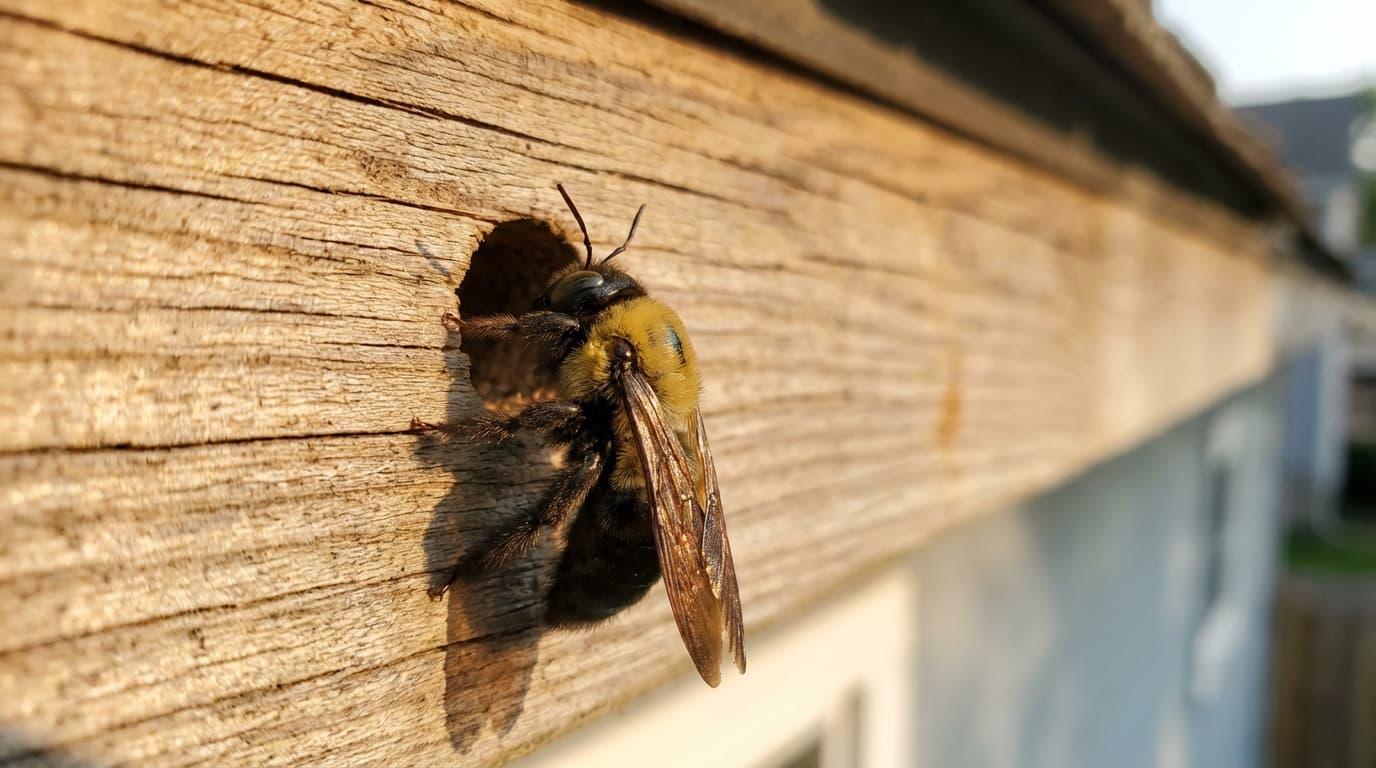
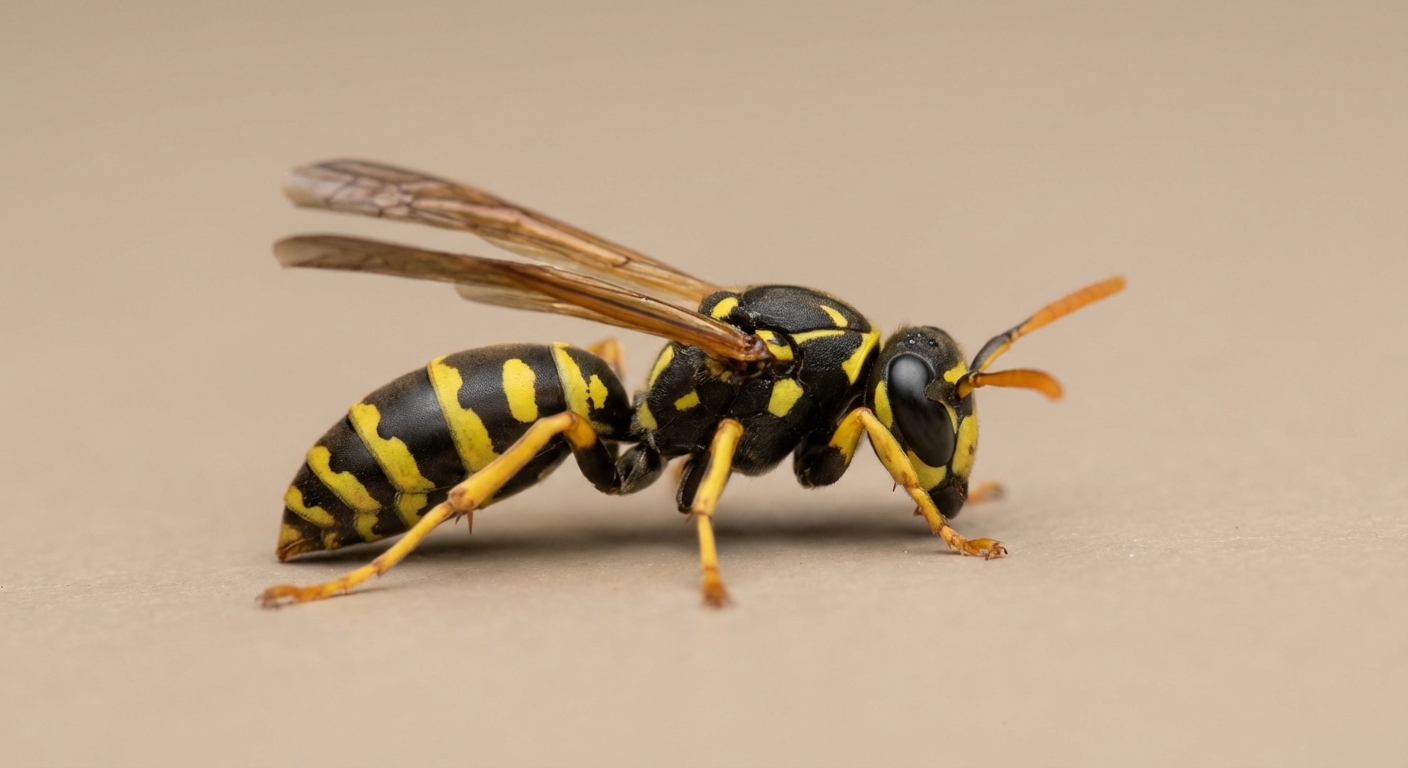
Carpenter bees are large, robust bees about 3/4 to 1 inch long that closely resemble bumblebees. The key difference is their abdomen — carpenter bees have a shiny, hairless black abdomen, while bumblebees have a fuzzy, hairy abdomen. Males have a yellow or white face patch and are often seen hovering aggressively near nesting sites, but they cannot sting. Females can sting but rarely do unless directly handled.
Signs of Infestation
Look for perfectly round holes about 1/2 inch in diameter bored into unfinished or weathered wood surfaces — fascia boards, deck railings, porch ceilings, window trim, and wooden outdoor furniture. You will notice coarse sawdust (frass) on surfaces below the entry holes. Males hover aggressively near nest sites, diving at people who approach. Staining below holes from yellowish-brown fecal deposits is another telltale sign.
Health Risks
Carpenter bees pose minimal direct health risks to Myrtle Beach residents. Males are territorial and may hover or dive-bomb near nesting areas, but they cannot sting. Females can sting but are docile and rarely do so unless directly handled. The primary concern for Grand Strand homeowners is structural damage to property caused by repeated nesting in the same wood over multiple years, which can create extensive gallery networks that weaken fascia boards, deck structures, and trim.
Our Treatment Method
At Myrtle Beach Pest Control, we treat active carpenter bee galleries by applying residual insecticidal dust deep into the tunnel system using specialized applicators. After treatment, we allow 24-48 hours for returning bees to contact the product before sealing holes with wood putty or dowel plugs. Exterior wood surfaces are then treated with a residual insecticide to deter new boring activity. For long-term prevention in our subtropical coastal climate, we recommend painting or staining all exposed wood surfaces to protect them from carpenter bees.
Prevention Tips
Paint or stain all exterior wood surfaces — carpenter bees strongly prefer unfinished wood and rarely bore into painted or stained surfaces. In the Grand Strand's coastal environment, plan on repainting or restaining exterior wood every 2-3 years, as salt air and UV exposure degrade protective finishes faster than inland. Fill existing holes with steel wool and wood putty after treatment by MBPC. Replace softwood trim with composite, PVC, or fiber cement alternatives that are impervious to boring and hold up better in the coastal climate of Myrtle Beach. Hang carpenter bee traps near previously active nesting sites in early spring — along the coast, activity can begin as early as late February.
Habitat
Carpenter bees prefer soft, unfinished, or weathered wood for nesting in the Grand Strand area. They bore perfectly round entrance holes and then turn 90 degrees to tunnel along the grain, creating galleries up to 10 inches long. Myrtle Beach's coastal humidity and salt spray cause exterior wood to weather and soften faster than inland areas, making homes particularly attractive to carpenter bees. Cedar and cypress trim — popular choices in coastal construction for their natural rot resistance — ironically become prime targets when their protective finish deteriorates in the salt air. Favorite targets include fascia boards, deck railings, porch ceilings, and wooden outdoor furniture. These bees return to the same nesting sites year after year, expanding existing galleries, and the Grand Strand's mild winters mean carpenter bees emerge earlier in spring than their inland counterparts.
Peak activity: Spring-Summer
Identification Photos
Frequently Asked Questions About Carpenter Bees
No. While similar in size, carpenter bees have a shiny, hairless black abdomen, while bumblebees have a fuzzy, hairy abdomen with yellow markings. Carpenter bees are solitary nesters that bore into wood around Myrtle Beach, while bumblebees are social insects that nest in the ground. The distinction matters because treatment approaches are completely different.
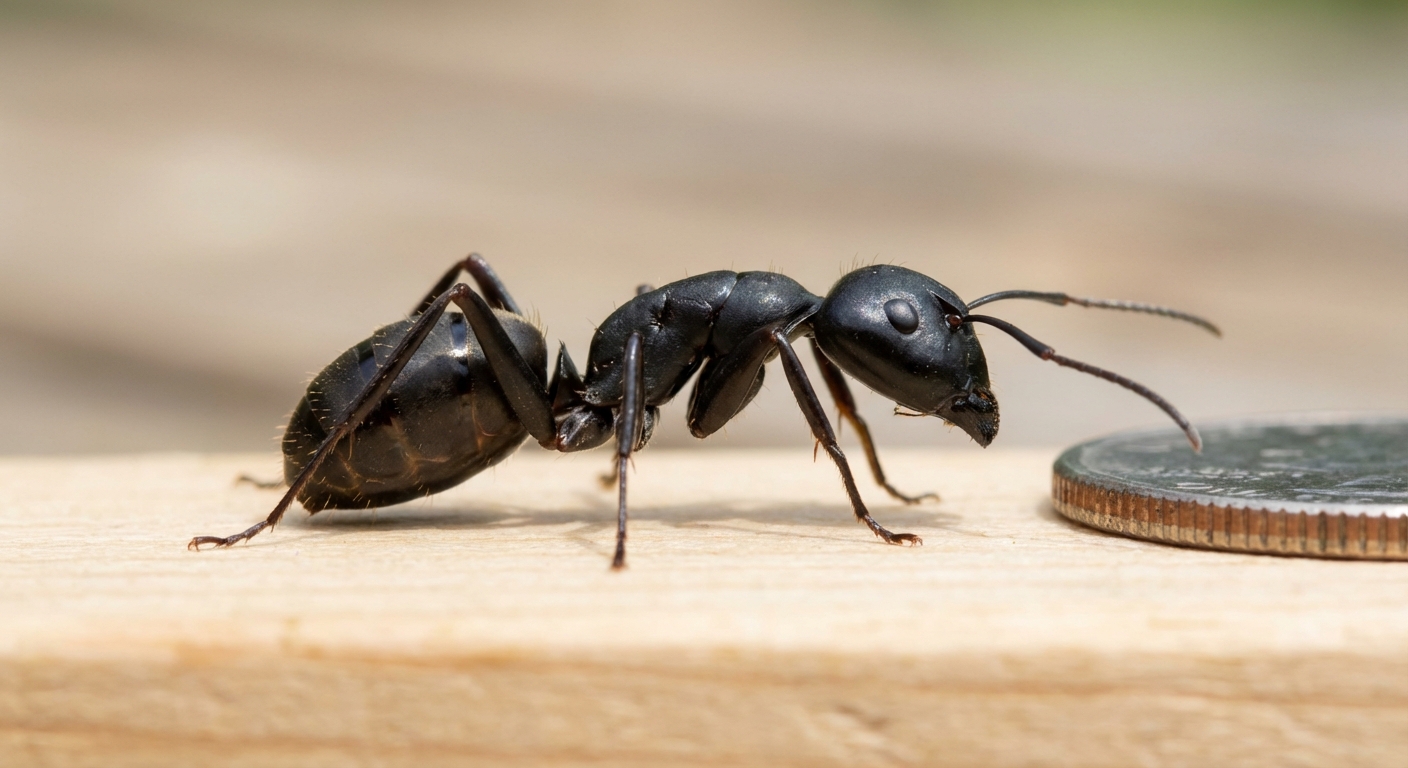
No. Like carpenter ants, carpenter bees do not consume wood — they excavate it to create nesting galleries in your Grand Strand home. The coarse sawdust (frass) found below entry holes is the excavated wood material. Carpenter bees feed on pollen and nectar like other bees.
Individual carpenter bee galleries cause minimal structural damage. However, carpenter bees return to the same nesting sites year after year in Myrtle Beach, and multiple generations expanding the same galleries can significantly weaken fascia boards, deck railings, and other structural wood over time. Woodpeckers also enlarge carpenter bee holes while feeding on larvae, compounding the damage in our local area.
Male carpenter bees are territorial and will hover near nest sites, diving at people who approach in the Grand Strand area. This behavior looks aggressive but is harmless — male carpenter bees cannot sting. You can identify males by their yellow or white face patch. Females can sting but are docile and focused on nest-building.
Related Pests
Don't Let Pests Win.
Take Back Your Home Today.
Every day you wait gives pests more time to multiply and cause damage. Our licensed technicians are ready to help — often the same day you call.
Free Inspection
No cost, no obligation
Same-Day Service
Fast response guaranteed
Eco-Friendly
Safe for family & pets
100% Guarantee
Pests return, so do we
Ready to get started?
Choose how you'd like to connect with us.
Available Mon-Fri 8am-6pm, Sat 9am-2pm