American Cockroach
Periplaneta americana
insectsHow to Identify
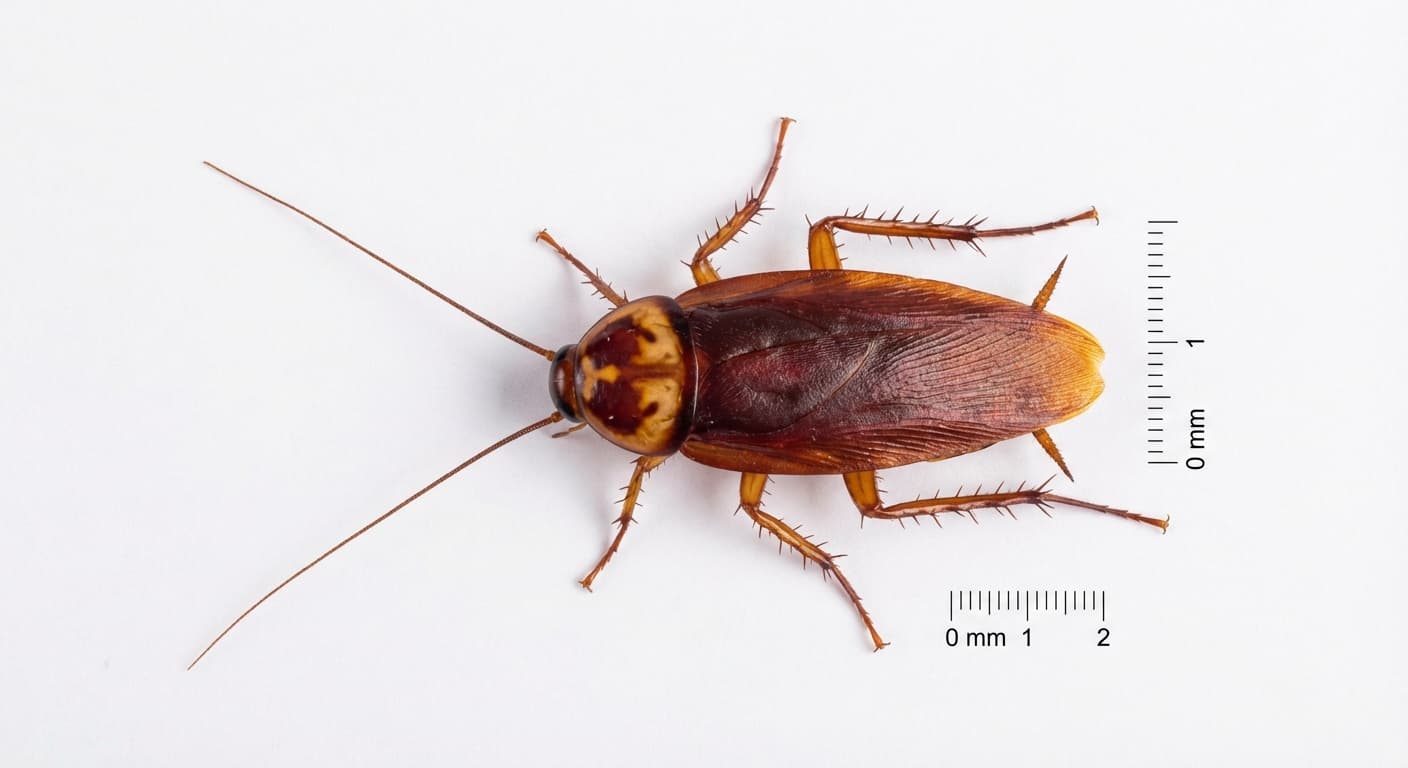
American cockroaches are the largest common cockroach species, measuring 1-1/2 to 2 inches long. They are reddish-brown with a distinctive yellowish figure-8 pattern on the back of the head shield (pronotum). Both males and females have fully developed wings and are capable of short, gliding flights, especially in warm weather. Nymphs are smaller and wingless but share the same reddish-brown coloring. Locally known as 'palmetto bugs' throughout the Grand Strand.
Signs of Infestation
American cockroaches leave dark, cylindrical droppings with blunt ends and ridges along the sides in basements, laundry rooms, and near drains. A strong, musty odor is noticeable in heavy infestations. Egg cases (oothecae) are dark reddish-brown, about 3/8 inch long, and often glued to surfaces near food sources. You may see them scurrying when you turn on lights at night, especially in kitchens, bathrooms, and garages.
Health Risks
American cockroaches are a significant health concern in Myrtle Beach homes. They carry bacteria including Salmonella, E. coli, and Staphylococcus, picked up from sewers, storm drains, and decaying organic matter. Their droppings, shed skins, and body fragments are potent allergens that trigger asthma and allergic reactions, particularly in children. The warm, humid Grand Strand climate keeps populations active year-round, increasing exposure risk.
Our Treatment Method
MBPC targets American cockroaches with a combination of exterior perimeter barrier treatments, interior crack-and-crevice applications, and granular baits placed around harborage areas. We treat storm drain access points, foundation vents, and plumbing penetrations — the primary entry routes for palmetto bugs in Myrtle Beach homes. Gel baits and dust formulations are applied in wall voids, attics, and crawlspaces. Our quarterly treatment program maintains protection year-round against the Grand Strand's persistent palmetto bug populations.
Prevention Tips
Seal gaps around exterior doors with door sweeps and weatherstripping. Caulk around plumbing penetrations, foundation vents, and utility entries. Fix leaky faucets and ensure crawlspaces have proper ventilation to reduce moisture. Keep mulch beds at least 12 inches from your foundation and thin to under 3 inches. Store outdoor garbage in sealed containers and keep dumpster areas clean. In Myrtle Beach's humid climate, reducing moisture around your home is the single most effective prevention strategy.
Habitat
American cockroaches prefer warm, humid environments and are primarily outdoor insects along the Grand Strand. They thrive in storm drains, sewer systems, mulch beds, palmetto tree canopies, and around dumpsters. They enter homes through gaps in foundations, under doors, around plumbing penetrations, and through storm drain connections. Myrtle Beach's subtropical climate, sandy soils, and proximity to salt marshes and tidal creeks create ideal conditions for year-round populations. They are particularly common in crawlspaces, garages, and laundry rooms where humidity levels are high.
Peak activity: Year-round
Identification Photos
Frequently Asked Questions About American Cockroach
Palmetto bug is the local name for the American cockroach (Periplaneta americana) throughout coastal South Carolina. They are the same insect. The name comes from their habit of living in and around palmetto trees, which are abundant along the Grand Strand. Despite the friendly nickname, they are cockroaches that carry bacteria and trigger allergies.
American cockroaches are capable of short, gliding flights, especially in warm, humid weather — exactly the conditions found most of the year in Myrtle Beach. They are not flying at you intentionally. They are poor fliers and often lose control mid-flight, landing on whatever is nearby. They are startled and attempting to escape, not attack.
American cockroaches enter Myrtle Beach homes through gaps under doors, cracks in foundations, around plumbing penetrations, and through connections to storm drains and sewer lines. They are attracted to moisture and warmth. Homes with crawlspaces, older plumbing, or poor door seals are most vulnerable. MBPC's perimeter barrier treatment intercepts them at entry points.
Yes — they are completely different species with different habits. American cockroaches (palmetto bugs) are large (1-1/2 to 2 inches), primarily outdoor, and enter homes through drains and gaps. German cockroaches are small (1/2 inch), strictly indoor, and infest kitchens and bathrooms. Treatment strategies differ significantly. MBPC identifies the species during inspection to ensure the right approach.
Related Pests
Confused About What You're Seeing?
German vs. American Cockroach — compare side by side to know for sure.
Open Comparison ToolDon't Let Pests Win.
Take Back Your Home Today.
Every day you wait gives pests more time to multiply and cause damage. Our licensed technicians are ready to help — often the same day you call.
Free Inspection
No cost, no obligation
Same-Day Service
Fast response guaranteed
Eco-Friendly
Safe for family & pets
100% Guarantee
Pests return, so do we
Ready to get started?
Choose how you'd like to connect with us.
Available Mon-Fri 8am-6pm, Sat 9am-2pm