
Common House Spider
Parasteatoda tepidariorum
arachnidsHow to Identify
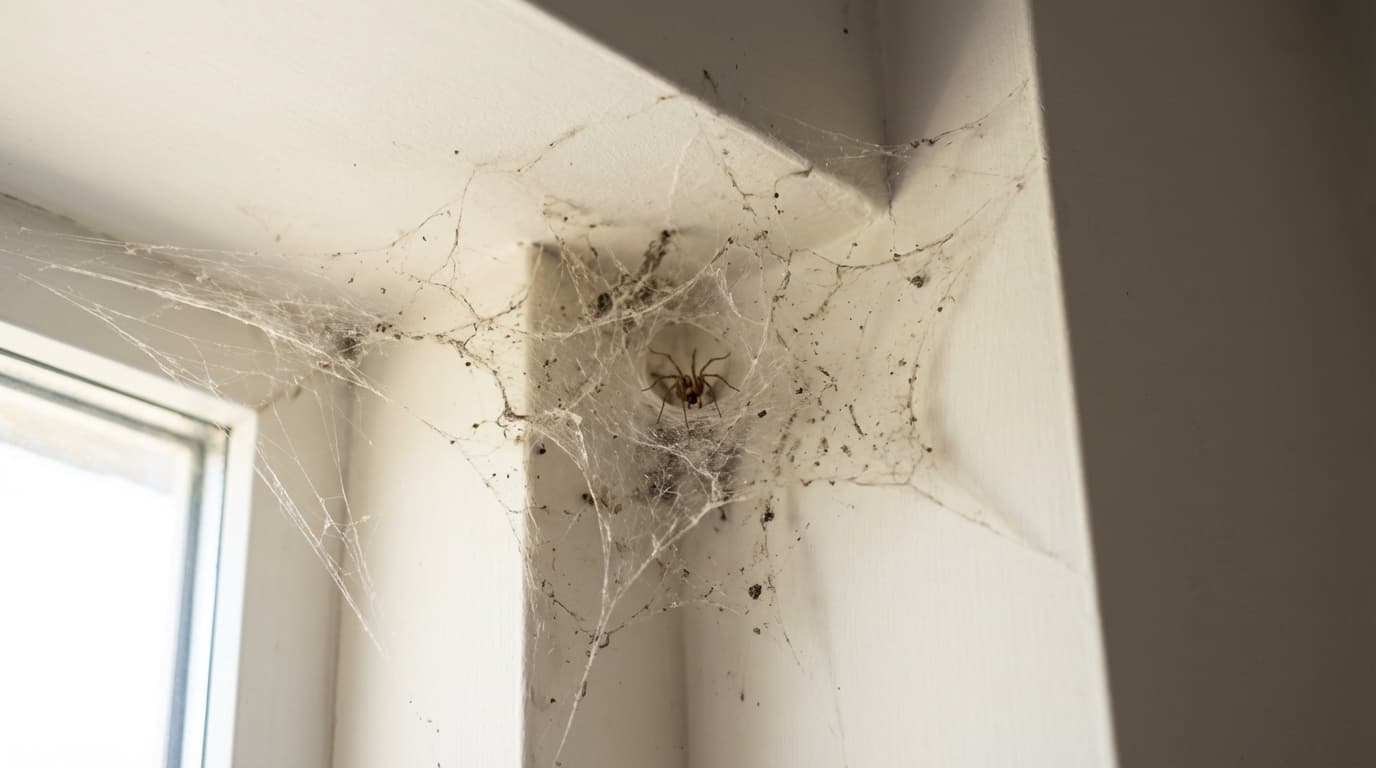
Common house spiders are small, measuring about 1/4 inch in body length, with a bulbous abdomen and relatively long, thin legs. Their coloring is variable — typically yellowish-brown to dirty white with dark chevron-like markings on the abdomen. Males are smaller and darker than females. They build the classic tangled cobwebs found in corners, under furniture, in basements, and around windows. They are often confused with brown recluses or young black widows but lack the distinctive markings of both.
Signs of Infestation
The most obvious sign is the accumulation of tangled cobwebs in upper corners of rooms, around window frames, in basements, garages, and crawlspaces. Abandoned webs collect dust and become the classic 'cobweb' associated with neglected spaces. You may also find small, round, brownish egg sacs wrapped in silk within or near the web. Seeing multiple spiders or dense webbing indicates a healthy prey insect population in the home.
Health Risks
Common house spiders are essentially harmless to humans in Myrtle Beach, SC. They can bite if trapped against skin, but bites are rare and comparable to a mild bee sting with brief, localized pain and redness. They do not transmit diseases. In fact, house spiders are beneficial predators that consume flies, mosquitoes, moths, and other nuisance insects common to the Grand Strand. Their primary concern is the unsightly cobwebs they produce throughout living spaces.
Our Treatment Method
Myrtle Beach Pest Control removes existing cobwebs and applies residual insecticide treatments to web-building sites including corners, window frames, basement walls, and exterior eaves. Dust formulations are applied to attic spaces, crawlspaces, and wall voids where spiders harbor. Because house spiders are indicators of a prey insect population, reducing the overall insect presence in the home through perimeter treatments and sealing entry points provides the most lasting spider reduction. Our services are tailored to the subtropical coastal environment of the Grand Strand.
Prevention Tips
Regular cobweb removal with a vacuum or extendable duster discourages spiders from rebuilding in the same locations. Reduce indoor lighting that attracts prey insects — switch exterior lights to yellow bulbs. Seal gaps around windows, doors, and utility penetrations to reduce both spider and prey insect entry. Address underlying insect populations that attract and sustain spider populations. For Myrtle Beach vacation properties and seasonal homes, schedule professional perimeter treatments from MBPC before and after the rental season to prevent the heavy webbing that accumulates during vacancy periods. Consider utilizing Jake Thompson and the MBPC team's expertise to target pests common in our sandy soil and coastal environment.
Habitat
As their name suggests, common house spiders are well-adapted to indoor living and are found year-round in buildings throughout Myrtle Beach and the Grand Strand. The area's warm, humid climate supports larger and more active house spider populations than cooler regions, with abundant prey insects feeding robust colonies year-round. They prefer undisturbed corners, closets, basements, crawlspaces, garages, and window wells. House spiders are especially prolific in coastal vacation properties that sit empty between renters or during the off-season — the quiet, undisturbed rooms quickly accumulate dense webbing during vacancy periods. Outdoors, they build webs under eaves, around porch lights, in shutters, and around outdoor structures, often near palmetto trees and salt marshes.
Peak activity: Year-round
Identification Photos
Frequently Asked Questions About Common House Spider
No. Common house spiders are harmless to humans in Myrtle Beach, SC, and are actually beneficial predators that help control flies, mosquitoes, and other nuisance insects. Their bite is rare and mild — comparable to a brief pinprick. They are not related to dangerous species like brown recluses or black widows.
A large spider population indicates a healthy prey insect population. Spiders go where the food is — if your home in the Grand Strand has flies, gnats, moths, or other small insects, spiders will thrive. Reducing the overall insect population through perimeter treatments and sealing entry points will naturally reduce spider numbers.
From a pest management perspective, house spiders are beneficial — they consume many nuisance insects common to coastal SC. However, we understand that many people are uncomfortable with spiders in their living spaces. Regular web removal discourages rebuilding, and professional perimeter treatments from Myrtle Beach Pest Control reduce both spider and prey insect populations.
Common house spiders have dark chevron markings on a rounded abdomen and build tangled cobwebs. Brown recluses have a uniform brown color with a violin-shaped marking on the cephalothorax, six eyes in three pairs, and build small irregular sheet webs. If you are unsure, capture the spider in a jar and contact Myrtle Beach Pest Control for identification.
Related Pests
Don't Let Pests Win.
Take Back Your Home Today.
Every day you wait gives pests more time to multiply and cause damage. Our licensed technicians are ready to help — often the same day you call.
Free Inspection
No cost, no obligation
Same-Day Service
Fast response guaranteed
Eco-Friendly
Safe for family & pets
100% Guarantee
Pests return, so do we
Ready to get started?
Choose how you'd like to connect with us.
Available Mon-Fri 8am-6pm, Sat 9am-2pm