
Stink Bugs
Halyomorpha halys
insectsHow to Identify
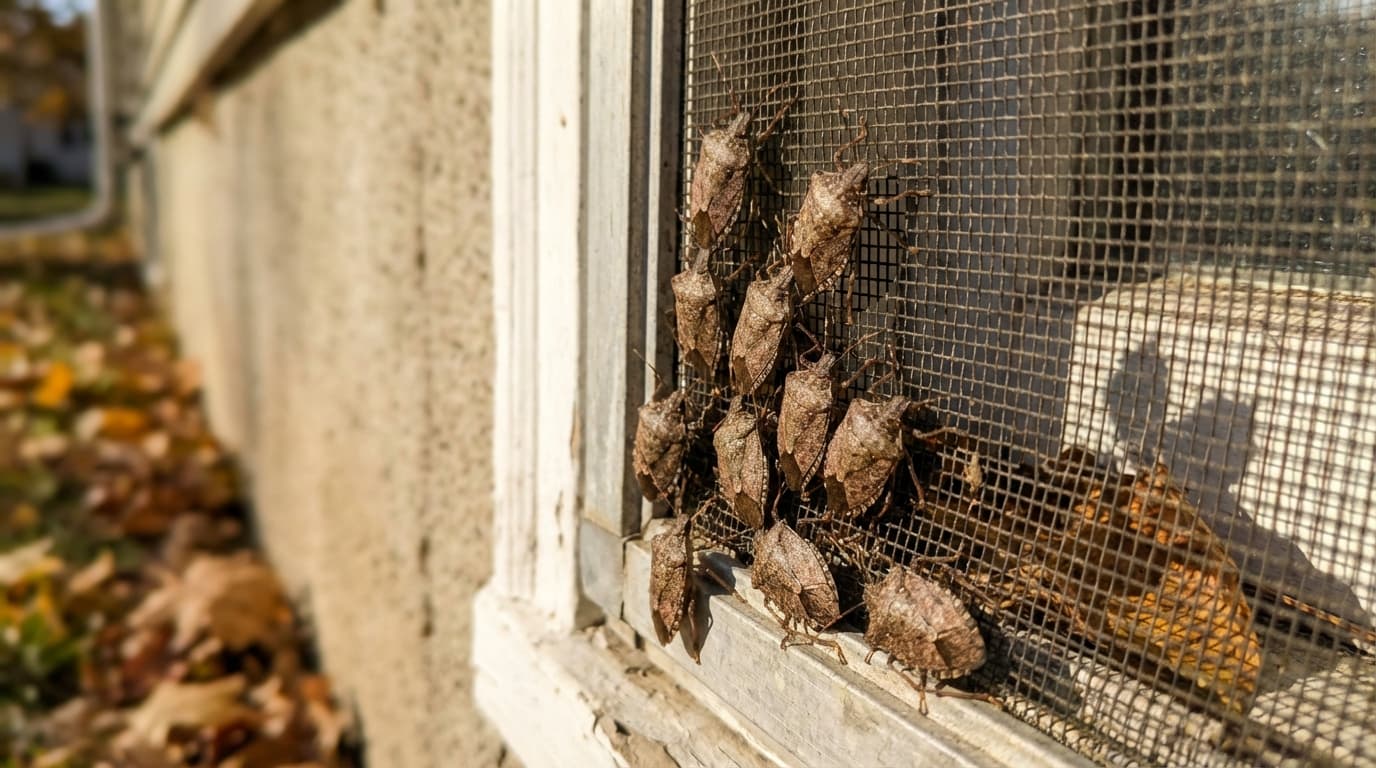
Brown marmorated stink bugs are shield-shaped insects about 5/8 inch long with a mottled brown and gray pattern. Key identifying features include alternating light and dark banding on the antennae and along the edges of the abdomen. They have a characteristic shield or heraldic shape when viewed from above. When disturbed or crushed, they release a pungent, cilantro-like odor from scent glands on the thorax. They are strong fliers and are attracted to warm surfaces and lights.
Signs of Infestation
Stink bugs become highly visible in fall when they seek warm structures for overwintering. You may notice them clustering on sun-warmed exterior walls, particularly south and west-facing surfaces. They enter through gaps around windows, doors, siding, and utility penetrations, congregating in attics, wall voids, and around window frames. On warm winter days, overwintering bugs become active inside the home and are found on windows and walls.
Health Risks
Stink bugs are nuisance pests and do not bite, sting, or transmit diseases, posing no direct health risk in Myrtle Beach, SC. Their primary concern is the foul odor they emit when disturbed or crushed, which can be persistent and unpleasant indoors, especially in our humid subtropical climate. In large numbers, their droppings and secretions can stain curtains, walls, and fabrics. Some individuals report allergic reactions to the chemical compounds in stink bug secretions.
Our Treatment Method
Fall exclusion is the most effective strategy in the Myrtle Beach area. MBPC seals entry points before stink bugs migrate indoors in September and October. We apply residual insecticide treatments to exterior walls, around windows, doors, and roofline gaps during the pre-invasion period. Interior treatments include crack-and-crevice applications in attic spaces and wall voids. For bugs already inside, vacuum removal is preferred over crushing to avoid triggering their defensive odor. Call MBPC at +1-843-555-0199 for a consultation.
Prevention Tips
Seal all gaps around windows, doors, siding joints, and utility penetrations before September, especially in areas near palmetto trees. Install or repair window screens and add door sweeps. Caulk around window frames, particularly on south and west-facing walls that warm in afternoon sun. Use a vacuum to remove indoor stink bugs rather than crushing them to avoid the defensive odor. Contact Myrtle Beach Pest Control for exclusion services.
Habitat
Brown marmorated stink bugs are an invasive species from Asia that has become well-established throughout the southeastern United States. During spring and summer, they feed on fruit trees, vegetables, and ornamental plants common in the Grand Strand area. In fall, they seek protected overwintering sites in structures, entering by the hundreds or thousands. Myrtle Beach, SC's subtropical coastal climate, with its mild winters, makes it prime stink bug territory. Significant fall invasions are common as bugs seek warm structures for overwintering near palmetto trees, salt marshes, and tidal creeks.
Peak activity: Fall
Identification Photos
Frequently Asked Questions About Stink Bugs
Brown marmorated stink bugs are programmed to seek protected overwintering sites as temperatures drop in September and October in Myrtle Beach, SC. Your home's warm, south-facing walls attract them, and they enter through tiny gaps around windows, doors, and siding. Once inside wall voids and attics, they become dormant until warm winter days trigger activity in our subtropical climate.
Never crush stink bugs — this triggers their defensive odor glands. Use a vacuum cleaner to remove them, then dispose of the vacuum bag outdoors. You can also gently sweep them into a container of soapy water. For large numbers in attic spaces, professional treatment from Myrtle Beach Pest Control is more practical than individual removal.
Stink bugs do not cause structural damage to homes in Myrtle Beach, SC. However, their droppings and secretions can stain curtains, walls, and light-colored fabrics, especially with our humid conditions. Large overwintering populations in attics and wall voids can produce noticeable odor on warm days when bugs become active. The primary concern is the nuisance of having hundreds of bugs emerging inside your home throughout winter.
No. The brown marmorated stink bug is an invasive species from East Asia. It has since spread throughout the eastern United States and is now well-established in coastal South Carolina, including the Myrtle Beach area. It is a significant agricultural pest that also damages home gardens, feeding on tomatoes, peppers, fruit trees, and ornamentals.
Related Pests
Don't Let Pests Win.
Take Back Your Home Today.
Every day you wait gives pests more time to multiply and cause damage. Our licensed technicians are ready to help — often the same day you call.
Free Inspection
No cost, no obligation
Same-Day Service
Fast response guaranteed
Eco-Friendly
Safe for family & pets
100% Guarantee
Pests return, so do we
Ready to get started?
Choose how you'd like to connect with us.
Available Mon-Fri 8am-6pm, Sat 9am-2pm