
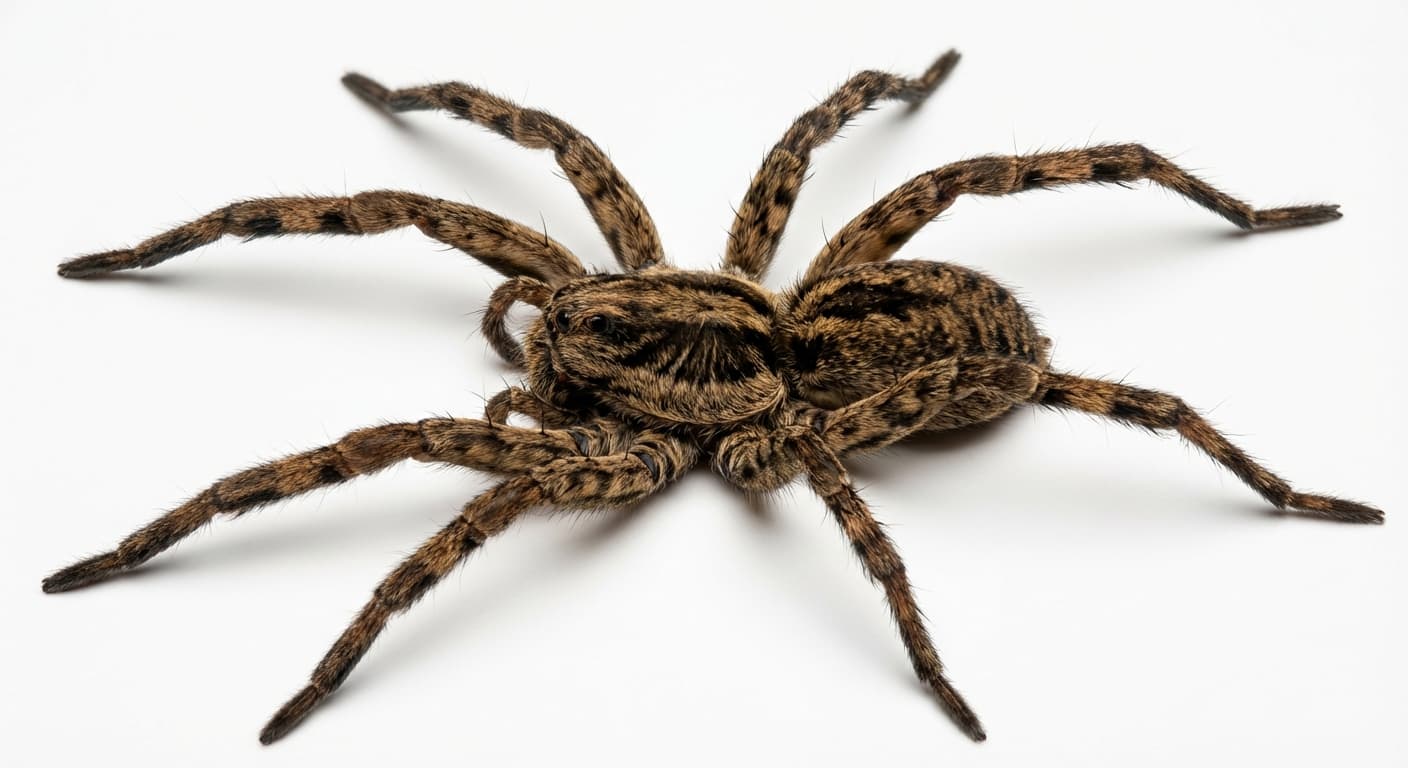
Wolf Spider
Hogna carolinensis
arachnidsHow to Identify
Wolf spiders are large, robust spiders measuring 1/2 to 2 inches in body length with long, hairy legs. They are brown to grayish-brown with a distinctive striped or mottled pattern on the body and contrasting markings on the legs. Their most notable feature is their eye arrangement: eight eyes in three rows, with two large, forward-facing eyes that reflect light brightly at night (a useful identification trick with a flashlight). Unlike web-building spiders, wolf spiders are active ground hunters.
Signs of Infestation
Wolf spiders do not build webs, so there are no web indicators. You may see them running across floors, walls, or patios, especially at night. They often enter homes in fall seeking warmth and shelter. Finding multiple wolf spiders indoors may indicate a prey insect population attracting them. Females carry a large, round egg sac attached to their spinnerets, and after hatching, dozens of tiny spiderlings ride on the mother's back — a startling sight.
Health Risks
Wolf spider bites are uncommon and medically insignificant for most people. Their venom is designed for subduing insect prey and causes only mild, localized pain and swelling comparable to a bee sting. Wolf spiders are frequently mistaken for brown recluses due to similar coloring, causing unnecessary alarm. Unlike brown recluses, wolf spider bites do not cause tissue necrosis. The primary concern is the fear and anxiety they cause due to their large size and fast movement in Myrtle Beach homes.
Our Treatment Method
MBPC controls wolf spiders by targeting their prey base with a comprehensive general pest treatment. Residual insecticide applied along baseboards, door thresholds, and garage entries creates a barrier that intercepts wolf spiders as they hunt. Exterior perimeter treatments around the foundation reduce the population entering from landscaping and mulch beds. We also apply dust formulations in crawlspaces and wall voids where wolf spiders harbor during the day. Reducing outdoor lighting that attracts prey insects further decreases wolf spider activity around your Myrtle Beach home.
Prevention Tips
Reduce outdoor harborage by keeping mulch beds thin and at least 12 inches from your foundation. Clear leaf litter, woodpiles, and debris from around your home's perimeter. Seal gaps under exterior doors with door sweeps. Switch exterior lighting to yellow or sodium vapor bulbs that attract fewer insects, reducing the prey that draws wolf spiders. Seal cracks around baseboards, utility penetrations, and garage door edges. Keep garages clean and uncluttered. In Myrtle Beach's sandy soil, ensure foundation-level gaps are properly sealed.
Habitat
Wolf spiders are ground-dwelling hunters found throughout the Myrtle Beach area. Outdoors, they live in leaf litter, mulch beds, under rocks and landscape timbers, in sandy burrows, and around foundations. They are active at night, hunting insects across lawns, patios, and driveways. Indoors, they enter through gaps under doors, through garage entries, and around foundation cracks. They are commonly found in garages, basements, crawlspaces, and along baseboards. The Grand Strand's warm climate and abundant insect prey keep wolf spider populations high year-round.
Peak activity: Year-round
Identification Photos
Frequently Asked Questions About Wolf Spider
Wolf spider bites are medically insignificant for most people, causing only mild pain and swelling similar to a bee sting. They are not aggressive and only bite when directly handled or trapped. Their venom does not cause tissue necrosis like a brown recluse. Wolf spiders are beneficial predators that eat other insects. The main concern is the fear they cause due to their large size and fast movement.
Wolf spiders are larger, have eight eyes (including two prominent forward-facing ones), and display a striped or mottled body pattern. Brown recluses are smaller, have six eyes in three pairs, and a distinctive violin-shaped marking on the head. Wolf spiders are active hunters seen running on floors; brown recluses are secretive and rarely seen in the open. If unsure, call MBPC for identification.
As temperatures cool in the Myrtle Beach area, wolf spiders migrate toward structures seeking warmth and shelter for winter. They enter through gaps under doors, garage entries, and foundation cracks. This seasonal influx is normal along the Grand Strand. A perimeter barrier treatment applied in early fall intercepts them at entry points before they come indoors.
No. Wolf spiders are active hunters that chase and pounce on prey rather than trapping it in a web. This is why they are often seen running across floors and patios. They rely on their excellent vision (those large forward-facing eyes) and speed to catch insects. If you find a spider in a web, it is not a wolf spider.
Related Pests

Confused About What You're Seeing?
Brown Recluse vs. Wolf Spider — compare side by side to know for sure.
Open Comparison ToolDon't Let Pests Win.
Take Back Your Home Today.
Every day you wait gives pests more time to multiply and cause damage. Our licensed technicians are ready to help — often the same day you call.
Free Inspection
No cost, no obligation
Same-Day Service
Fast response guaranteed
Eco-Friendly
Safe for family & pets
100% Guarantee
Pests return, so do we
Ready to get started?
Choose how you'd like to connect with us.
Available Mon-Fri 8am-6pm, Sat 9am-2pm